
Lincoln Aviator 2020-2026 Owners Manual / Adaptive Cruise Control / How Does Adaptive Cruise Control With Stop and Go Work
Lincoln Aviator: Adaptive Cruise Control / How Does Adaptive Cruise Control With Stop and Go Work
Adaptive cruise control with stop and go uses radar and camera sensors to adjust the speed of your vehicle to maintain a set gap from the vehicle in front of you in the same lane while following it to a complete stop. You can also engage the system to follow a vehicle in front of you and adjust set speed while stopped.

 What Is Adaptive Cruise Control With Lane Centering
Adaptive cruise control with lane centering
uses radar and camera sensors to help keep
your vehicle in the lane by applying
continuous assistance steering torque input
toward the lane center on highways...
Other information:
Lincoln Aviator 2020-2026 Service Manual: Removal and Installation - Thermostat
Special Tool(s) / General Equipment Hose Clamp Remover/Installer Removal NOTE: Removal steps in this procedure may contain installation details. Drain the cooling system. Refer to: Engine Cooling System Draining, Vacuum Filling and Bleeding (303-03A Engine Cooling - 3...
Lincoln Aviator 2020-2026 Service Manual: Removal and Installation - Main Control Valve Body
Removal NOTE: The Solenoid Body Strategy Data Download procedure must be performed if a new main control valve body is installed. Remove the transmission fluid pan gasket and filter. Refer to: Transmission Fluid Pan, Gasket and Filter (307-01A Automatic Transmission - 10-Speed Automatic Transmission – 10R60, Removal and Installation)...
Categories
- Manuals Home
- Lincoln Aviator Owners Manual
- Lincoln Aviator Service Manual
- Opening and Closing the Hood
- Remove and Reinstall the Battery
- General Procedures - Transmission Fluid Drain and Refill
- New on site
- Most important about car
Fastening the Seatbelts
The front outboard and rear safety restraints in the vehicle are combination lap and shoulder belts.
Insert the belt tongue into the proper buckle (the buckle closest to the direction the tongue is coming from) until you hear a snap and feel it latch. Make sure that you securely fasten the tongue in the buckle.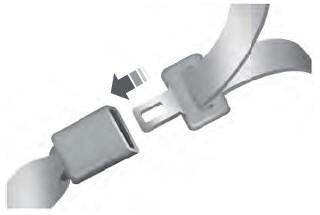

Copyright © 2026 www.liaviator2.com