
Lincoln Aviator: Security / Anti-Theft Alarm
The active anti-theft system is designed to warn you in the event of unauthorized vehicle entry and is also designed to help prevent unwanted towing of your vehicle. You can choose what is monitored by arming the system in different ways.
The direction indicators flash and the horn sounds if the system triggers while the alarm is armed.
Take all remote controls to an authorized dealer if there is any potential alarm problem with your vehicle.
Using the System
You can select two levels of alarm security. You can change the level of security when the ignition is switched off through the information display with the two options below:
Perimeter Sensing (If Equipped)
Perimeter sensing monitors the following:
- Doors.
- Hood.
- Liftgate.
All Sensors (If Equipped)
All sensors monitors the following:
- Doors.
- Hood.
- Liftgate.
- Movement inside your vehicle.
- Change in vehicle inclination, for example, unwanted towing.
Note: Do not choose all sensors monitor mode when the vehicle is in transport or if movement within the vehicle is likely to occur.
Note: For correct operation of the interior motion detection system, make sure you close all the windows prior to arming the system. This helps prevent accidental alarm activation due to external influences.
Additionally, the interior motion sensing system does not arm if any door is ajar.
Arming the Alarm
The alarm is ready to arm when there is not a key in the ignition. Lock your vehicle using the remote control or keyless entry keypad. You can also lock your vehicle using the lock sensor on the exterior door handle if your vehicle is equipped with intelligent access.
The direction indicators flash once after you lock your vehicle. This indicates the alarm is in the pre-armed mode. It fully arms after 20 seconds.
Disarming the Alarm
Disarm the alarm by any of the following actions:
- Press the power door unlock button within the 20-second pre-armed mode.
- Unlock the doors with the remote control or keyless entry keypad. If equipped with intelligent access, you can use the unlock sensor on the exterior door handle.
- Switch the ignition on or start your vehicle.
- Use a key in the driver door lock cylinder to unlock your vehicle, then switch the ignition on within 12 seconds.
Note: Pressing the panic button on the remote control stops the horn and direction indicators, but does not disarm the system.
 Passive Anti-Theft System
Note: The system is not compatible with
non-Ford aftermarket remote start systems.
Use of these systems may result in vehicle
starting problems and a loss of security
protection...

Other information:
Lincoln Aviator 2020-2026 Service Manual: Removal and Installation - Roof Panel
Special Tool(s) / General Equipment Resistance Spotwelding Equipment Scraper for Straight Edges Hot Air Gun Knife 8 mm Drill Bit MIG/MAG Welding Equipment Spot Weld Drill Bit Locking Pliers Materials Name Specification Metal Bonding AdhesiveTA-1, TA-1-B, 3M™ 08115, LORD Fusor® 108B - Seam SealerTA-2-B, 3M™ 08308, LORD Fusor® 803DTM - Removal WARNING: Before beginning any service procedure in this manual, refer to health and safety warnings in section 100-00 General Information...
Lincoln Aviator 2020-2026 Service Manual: Description and Operation - Handles, Locks, Latches and Entry Systems - System Operation and Component Description
System Operation System Diagrams NOTE: The Phone As A Key feature can also be used to lock/unlock the vehicle. Refer to section 419-01C for information regarding this feature. NOTE: Not all vehicles come equipped with all the items listed in the system diagrams...
Categories
- Manuals Home
- Lincoln Aviator Owners Manual
- Lincoln Aviator Service Manual
- USB Port and Power Point Locations
- Body and Paint
- Description and Operation - Jacking and Lifting
- New on site
- Most important about car
Remote Control
Passive Key
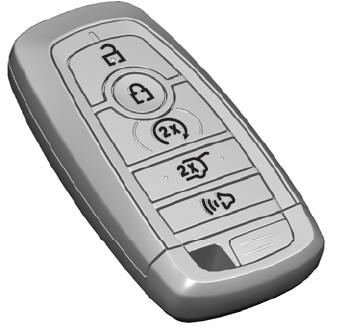
The passive key operates the power locks and the remote start system. The passive key must be in your vehicle to use the push button start.
Note: You may not be able to shift out of park (P) unless the passive key is inside your vehicle.
