
Lincoln Aviator: Hybrid Vehicle Operation / Braking
Your hybrid is equipped with standard hydraulic braking and regenerative braking. Regenerative braking is performed by your transmission and it captures brake energy and stores it in the high voltage battery.
You may also notice during extending downhill driving that your engine continues to run instead of shutting off. During this engine braking, the engine stays on, but it is not using any fuel. You may also hear a slight whine or whistle when operating your vehicle. This is the normal operation of the electric motor in the hybrid system.
 Transmission Operation. Battery
Transmission Operation
The engine and electric motor together
propel the vehicle through the automatic
transmission. This is normal hybrid operating
and helps deliver fuel efficiency and
performance...
 Driving to Optimize Fuel Economy
Note: Having your engine running is not
always an indication of inefficiency. In some
cases, it is actually more efficient than
driving in electric mode...
Other information:
Lincoln Aviator 2020-2026 Service Manual: Diagnosis and Testing - Catalyst System
Diagnostic Trouble Code (DTC) Chart Diagnostics in this manual assume a certain skill level and knowledge of Ford-specific diagnostic practices.REFER to: Diagnostic Methods (100-00 General Information, Description and Operation). Diagnostic Trouble Code Chart Module DTC Description Action PCM P0420:00 Catalyst System Efficiency Below Threshold (Bank 1): No Sub Type Information GO to Pinpoint Test HF PCM P0430:00 Catalyst System Efficiency Below Threshold (Bank 2): No Sub Type Information GO to Pinpoint Test HF Global Customer Symptom Code (GCSC) Chart Diagnostics in this manual assume a certain skill level and knowledge of Ford-specific diagnostic practices...
Lincoln Aviator 2020-2026 Owners Manual: Hands-Free Feature (If Equipped)
Make sure you have the passive key within 3 ft (1 m) of the liftgate. Stand behind your vehicle, and face the liftgate. Move your foot, in a single-kick motion, without pausing, under and away from the rear bumper detection area. The liftgate opens or closes...
Categories
- Manuals Home
- Lincoln Aviator Owners Manual
- Lincoln Aviator Service Manual
- Configuring The Head Up Display
- Garage Door Opener
- Body and Paint
- New on site
- Most important about car
Fastening the Seatbelts
The front outboard and rear safety restraints in the vehicle are combination lap and shoulder belts.
Insert the belt tongue into the proper buckle (the buckle closest to the direction the tongue is coming from) until you hear a snap and feel it latch. Make sure that you securely fasten the tongue in the buckle.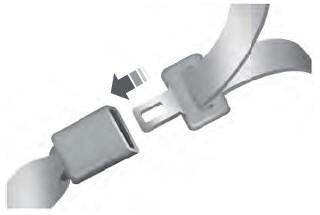

Copyright © 2026 www.liaviator2.com