
Lincoln Aviator: Vehicle Care / Cleaning Leather Seats

Note: Follow the same procedure as cleaning leather seats for cleaning leather instrument panels and leather interior trim surfaces.

For routine cleaning, wipe the surface with a soft, damp cloth and a mild soap and water solution. Dry the area with a clean, soft cloth.

For cleaning and removing stains such as dye transfer, use Motorcraft Premium Leather and Vinyl Cleaner or a commercially available leather cleaning product for automotive interiors.

Note: Test any cleaner or stain remover on an inconspicuous area.

You should:

  • Remove dust and loose dirt with a vacuum cleaner.
  • Clean and treat spills and stains as soon as possible.

Do not use the following products as these may damage the leather:

  • Oil and petroleum or silicone-based leather conditioners.
  • Household cleaners.
  • Alcohol solutions.
  • Solvents or cleaners intended specifically for rubber, vinyl and plastics.

    Cleaning the Instrument Panel and Instrument Cluster Lens

    WARNING: Do not use chemical solvents or strong detergents when cleaning the steering wheel or instrument panel to avoid contamination of the airbag system...

    Repairing Minor Paint Damage

    Authorized dealers have touch-up paint to match your vehicle’s color. Your vehicle color code is printed on a sticker on the front, left-hand side door jamb...

    Other information:

    Lincoln Aviator 2020-2026 Owners Manual: Autolamps and Instrument Lighting Dimmer


    Autolamps WARNING: The system does not relieve you of your responsibility to drive with due care and attention. You may need to override the system if it does not turn the headlamps on in low visibility conditions, for example daytime fog. Autolamps turn the headlamps on in low light situations or when the wipers operate...

    Lincoln Aviator 2020-2026 Service Manual: Diagnosis and Testing - Engine Ignition


    Diagnostic Trouble Code (DTC) Chart Diagnostics in this manual assume a certain skill level and knowledge of Ford-specific diagnostic practices.REFER to: Diagnostic Methods (100-00 General Information, Description and Operation).   Diagnostic Trouble Code Chart Module   DTC Description Action   PCM P0300:00 Random Misfire Detected: No Sub Type Information   GO to Pinpoint Test HD   PCM P0301:00 Cylinder 1 Misfire Detected: No Sub Type Information   GO to Pinpoint Test HD   PCM P0302:00 Cylinder 2 Misfire Detected: No Sub Type Information   GO to Pinpoint Test HD   PCM P0303:00 Cylinder 3 Misfire Detected: No Sub Type Information   GO to Pinpoint Test HD   PCM P0304:00 Cylinder 4 Misfire Detected: No Sub Type Information   GO to Pinpoint Test HD   PCM P0305:00 Cylinder 5 Misfire Detected: No Sub Type Information   GO to Pinpoint Test HD   PCM P0306:00 Cylinder 6 Misfire Detected: No Sub Type Information   GO to Pinpoint Test HD   PCM P0307:00 Cylinder 7 Misfire Detected: No Sub Type Information   GO to Pinpoint Test HD   PCM P0308:00 Cylinder 8 Misfire Detected: No Sub Type Information   GO to Pinpoint Test HD   PCM P0313:00 Misfire Detected With Low Fuel: No Sub Type Information   GO to Pinpoint Test HD   PCM P0316:00 Misfire Detected On Startup (First 1000 Revolutions): No Sub Type Information   GO to Pinpoint Test HD   PCM P0325:00 Knock/Combustion Vibration Sensor A Circuit: No Sub Type Information   GO to Pinpoint Test DG   PCM P0327:00 Knock/Combustion Vibration Sensor A Circuit Low: No Sub Type Information   GO to Pinpoint Test DG   PCM P0328:00 Knock/Combustion Vibration Sensor A Circuit High: No Sub Type Information   GO to Pinpoint Test DG   PCM P032A:00 Knock/Combustion Vibration Sensor C Circuit: No Sub Type Information   GO to Pinpoint Test DG   PCM P032C:00 Knock/Combustion Vibration Sensor C Circuit Low: No Sub Type Information   GO to Pinpoint Test DG   PCM P032D:00 Knock/Combustion Vibration Sensor C Circuit High: No Sub Type Information   GO to Pinpoint Test DG   PCM P0330:00 Knock/Combustion Vibration Sensor B Circuit: No Sub Type Information   GO to Pinpoint Test DG   PCM P0332:00 Knock/Combustion Vibration Sensor B Circuit Low: No Sub Type Information   GO to Pinpoint Test DG   PCM P0333:00 Knock/Combustion Vibration Sensor B Circuit High: No Sub Type Information   GO to Pinpoint Test DG   PCM P033A:00 Knock/Combustion Vibration Sensor D Circuit: No Sub Type Information   GO to Pinpoint Test DG   PCM P033C:00 Knock/Combustion Vibration Sensor D Circuit Low: No Sub Type Information   GO to Pinpoint Test DG   PCM P033D:00 Knock/Combustion Vibration Sensor D Circuit High: No Sub Type Information   GO to Pinpoint Test DG   PCM P0351:00 Ignition Coil A Primary Control Circuit/Open: No Sub Type Information   GO to Pinpoint Test JF   PCM P0352:00 Ignition Coil B Primary Control Circuit/Open: No Sub Type Information   GO to Pinpoint Test JF   PCM P0353:00 Ignition Coil C Primary Control Circuit/Open: No Sub Type Information   GO to Pinpoint Test JF   PCM P0354:00 Ignition Coil D Primary Control Circuit/Open: No Sub Type Information   GO to Pinpoint Test JF   PCM P0355:00 Ignition Coil E Primary Control Circuit/Open: No Sub Type Information   GO to Pinpoint Test JF   PCM P0356:00 Ignition Coil F Primary Control Circuit/Open: No Sub Type Information   GO to Pinpoint Test JF   PCM P0357:00 Ignition Coil G Primary Control Circuit/Open: No Sub Type Information   GO to Pinpoint Test JF   PCM P0358:00 Ignition Coil H Primary Control Circuit/Open: No Sub Type Information   GO to Pinpoint Test JF   PCM P06B6:00 Internal Control Module Knock Sensor Processor 1 Performance: No Sub Type Information   GO to Pinpoint Test DG   PCM P06D1:00 Internal Control Module Ignition Coil Control Module Performance: No Sub Type Information   GO to Pinpoint Test JF   PCM P112A:00 Too Many Engine Starts During Factory/Transport Mode: No Sub Type Information   GO to Pinpoint Test JB   PCM P130D:00 Engine Knock/Combustion Performance - Forced Limited Power: No Sub Type Information   GO to Pinpoint Test DG   PCM P2300:00 Ignition Coil A Primary Control Circuit Low: No Sub Type Information   GO to Pinpoint Test JF   PCM P2301:00 Ignition Coil A Primary Control Circuit High: No Sub Type Information   GO to Pinpoint Test JF   PCM P2303:00 Ignition Coil B Primary Control Circuit Low: No Sub Type Information   GO to Pinpoint Test JF   PCM P2304:00 Ignition Coil B Primary Control Circuit High: No Sub Type Information   GO to Pinpoint Test JF   PCM P2306:00 Ignition Coil C Primary Control Circuit Low: No Sub Type Information   GO to Pinpoint Test JF   PCM P2307:00 Ignition Coil C Primary Control Circuit High: No Sub Type Information   GO to Pinpoint Test JF   PCM P2309:00 Ignition Coil D Primary Control Circuit Low: No Sub Type Information   GO to Pinpoint Test JF   PCM P2310:00 Ignition Coil D Primary Control Circuit High: No Sub Type Information   GO to Pinpoint Test JF   PCM P2312:00 Ignition Coil E Primary Control Circuit Low: No Sub Type Information   GO to Pinpoint Test JF   PCM P2313:00 Ignition Coil E Primary Control Circuit High: No Sub Type Information   GO to Pinpoint Test JF   PCM P2315:00 Ignition Coil F Primary Control Circuit Low: No Sub Type Information   GO to Pinpoint Test JF   PCM P2316:00 Ignition Coil F Primary Control Circuit High: No Sub Type Information   GO to Pinpoint Test JF   PCM P2319:00 Ignition Coil G Primary Control Circuit High: No Sub Type Information   GO to Pinpoint Test JF   PCM P2322:00 Ignition Coil H Primary Control Circuit High: No Sub Type Information   GO to Pinpoint Test JF Global Customer Symptom Code (GCSC) Chart Diagnostics in this manual assume a certain skill level and knowledge of Ford-specific diagnostic practices...

    Categories

    Children and Airbags

    WARNING: Airbags can kill or injure a child in a child restraint. Never place a rear-facing child restraint in front of an active airbag. If you must use a forward-facing child restraint in the front seat, move the seat upon which the child restraint is installed all the way back.
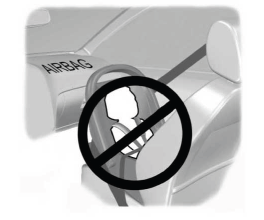
    Lincoln Aviator. Children and Airbags

    read more

     
    Copyright © 2026 www.liaviator2.com