
Lincoln Aviator 2020-2026 Owners Manual / Supplementary Restraints System / Driver and Passenger Airbags / Children and Airbags
Lincoln Aviator: Driver and Passenger Airbags / Children and Airbags
WARNING: Airbags can kill or injure a child in a child restraint. Never place a rear-facing child restraint in front of an active airbag. If you must use a forward-facing child restraint in the front seat, move the seat upon which the child restraint is installed all the way back.
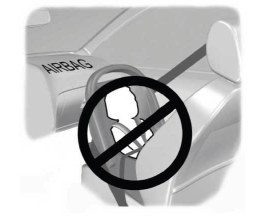
Children must always be properly restrained. Accident statistics suggest that children are safer when properly restrained in the rear seating positions than in the front seating position. Failure to follow these instructions may increase the risk of injury in a crash.
 Proper Driver and Front Passenger Seating Adjustment
WARNING: National Highway Traffic
Safety Administration (NHTSA)
recommends a minimum distance of at
least 10 in (25 cm) between an occupant's
chest and the driver airbag module...
 Front Passenger Sensing System
WARNING: Even with advanced
restraints systems, properly restrain
children 12 and under in a rear seating
position. Failure to follow this could
seriously increase the risk of injury or
death...
Other information:
Lincoln Aviator 2020-2026 Owners Manual: Fast Restart
The fast restart feature allows you to restart your vehicle within 20 seconds of switching it off, even if it does not detect a valid passive key. Within 20 seconds of switching the engine off, press the brake pedal and press the push button ignition switch...
Lincoln Aviator 2020-2026 Service Manual: Removal and Installation - Roof Front Frame
Special Tool(s) / General Equipment Resistance Spotwelding Equipment Spot Weld Drill Bit Locking Pliers Removal WARNING: Before beginning any service procedure in this manual, refer to health and safety warnings in section 100-00 General Information...
Categories
- Manuals Home
- Lincoln Aviator Owners Manual
- Lincoln Aviator Service Manual
- Body and Paint
- Tire Change Procedure
- Locking and Unlocking
- New on site
- Most important about car
Fastening the Seatbelts
The front outboard and rear safety restraints in the vehicle are combination lap and shoulder belts.
Insert the belt tongue into the proper buckle (the buckle closest to the direction the tongue is coming from) until you hear a snap and feel it latch. Make sure that you securely fasten the tongue in the buckle.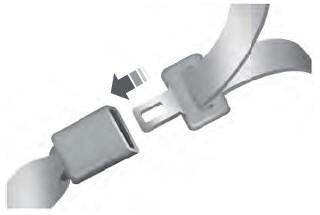

Copyright © 2026 www.liaviator2.com