
Lincoln Aviator 2020-2026 Service Manual / Powertrain / Automatic Transmission / Automatic Transmission - 10-Speed Automatic Transmission – 10R60 / General Procedures - Transmission Fluid Exchange
Lincoln Aviator: Automatic Transmission - 10-Speed Automatic Transmission – 10R60 / General Procedures - Transmission Fluid Exchange
Special Tool(s) / General Equipment
| Fluid Exchanger |
Materials
| Name | Specification |
|---|---|
| Motorcraft® MERCON® ULV Automatic Transmission Fluid XT-12-QULV |
WSS-M2C949-A, MERCON® ULV |
Connect
NOTICE: Use transmission fluid specific for this transmission. Do not use any supplemental transmission fluid additives or cleaning agents. The use of these products can cause internal transmission components to fail, which will affect the operation of the transmission.
-
With the vehicle in NEUTRAL, position it on a hoist.
Refer to: Jacking and Lifting (100-02 Jacking and Lifting, Description and Operation).
-
Connect the Fluid Exchanger to the transmission fluid
cooler tube after the transmission fluid cooler on the return tube. This
helps remove any foreign material trapped in the transmission fluid
coolers.
Use the General Equipment: Fluid Exchanger
-
Perform the transmission fluid exchange using the Fluid Exchanger.
-
Follow the manufacturer's instructions included with the machine.
Use the General Equipment: Fluid Exchanger
Material: Motorcraft® MERCON® ULV Automatic Transmission Fluid / XT-12-QULV (WSS-M2C949-A, ) (MERCON® ULV)
-
Refer here for current material specs
Material
-
Follow the manufacturer's instructions included with the machine.
-
Once the transmission fluid exchange is completed,
disconnect the Fluid Exchanger. Reconnect any disconnected transmission
fluid cooler tubes.
Use the General Equipment: Fluid Exchanger
-
Check the transmission fluid level.
Refer to: Transmission Fluid Level Check (307-01A Automatic Transmission - 10-Speed Automatic Transmission – 10R60, General Procedures).
 General Procedures - Transmission Fluid Drain and Refill
Special Tool(s) /
General Equipment
307-570Tube, Transmission FillTKIT-2006U-F/FMTKIT-2006U-FLM/LMTKIT-2006U-ROW1TKIT-2006U-ROW2
Fluid Suction Gun
Materials
Name
Specification
Motorcraft® MERCON® ULV Automatic Transmission FluidXT-12-QULV
WSS-M2C949-A, MERCON® ULV
Draining
NOTE:
It is not necessary to remove the transmission fluid filter to drain the transmission fluid...
 General Procedures - Transmission Fluid Level Check
Check
NOTICE:
The vehicle should not be driven if the transmission fluid level is low. Internal failure could result.
NOTE:
If the vehicle has been operated for an extended period at
high highway speeds, in city traffic, during hot weather or while
pulling a trailer, the transmission fluid must cool down to obtain an
accurate reading...
Other information:
Lincoln Aviator 2020-2026 Service Manual: General Procedures - Elevation System Check
Check Turn the ignition ON, engine OFF. Set the parking brake. Place the gearshift in REVERSE (R) for rear parking aid sensors. Place the gearshift in DRIVE (D) for front parking aid sensors...
Lincoln Aviator 2020-2026 Service Manual: Diagnosis and Testing - Climate Control System
Diagnostic Trouble Code (DTC) Chart Diagnostics in this manual assume a certain skill level and knowledge of Ford-specific diagnostic practices. REFER to: Diagnostic Methods (100-00 General Information, Description and Operation). Diagnostic Trouble Code Chart Module DTC Description Action ACCM B11EE:19 A/C Compressor: Circuit Current Above Threshold GO to Pinpoint Test AJ ACCM B11EE:41 A/C Compressor: General Checksum Failure GO to Pinpoint Test AS ACCM B11EE:4B A/C Compressor: Over Temperature GO to Pinpoint Test AJ ACCM B11EE:92 A/C Compressor: Performance or Incorrect Operation GO to Pinpoint Test AJ ACCM P0562:00 System Voltage Low: No Sub Type Information GO to Pinpoint Test AJ ACCM P0563:00 System Voltage High: No Sub Type Information GO to Pinpoint Test AJ ACCM P0AFA:16 Hybrid/EV Battery System Voltage Low: Circuit Voltage Below Threshold GO to Pinpoint Test AJ ACCM P0AFB:17 Hybrid/EV Battery System Voltage High: Circuit Voltage Above Threshold GO to Pinpoint Test AJ ACCM P0AFB:1C Hybrid/EV Battery System Voltage High: Circuit Voltage Out of Range GO to Pinpoint Test AJ ACCM U0001:88 High Speed CAN Communication Bus: Bus Off GO to Pinpoint Test AP ACCM U0100:00 Lost Communication with ECM/PCM "A": No Sub Type Information GO to Pinpoint Test AL ACCM U0111:00 Lost Communication With Battery Energy Control Module "A": No Sub Type Information GO to Pinpoint Test AM ACCM U0140:00 Lost Communication With Body Control Module: No Sub Type Information GO to Pinpoint Test P ACCM U3000:04 Control Module: System Internal Failure GO to Pinpoint Test AS ACCM U3000:42 Control Module: General Memory Failure GO to Pinpoint Test AS ACCM U3000:49 Control Module: Internal Electronic Failure GO to Pinpoint Test AS BCMC B3A01:00 A/C Refrigerant Distribution Valve Actuator "C" Control Circuit/Open: No Sub Type Information GO to Pinpoint Test AV BCMC B3A02:00 A/C Refrigerant Distribution Valve Actuator "C" Control Circuit Low: No Sub Type Information GO to Pinpoint Test AV BCMC B3A03:00 A/C Refrigerant Distribution Valve Actuator "C" Control Circuit High: No Sub Type Information GO to Pinpoint Test AV BCMC P2611:00 A/C Refrigerant Distribution Valve "A" Control Circuit/Open: No Sub Type Information GO to Pinpoint Test AT BCMC P2612:00 A/C Refrigerant Distribution Valve "A" Control Circuit Low: No Sub Type Information GO to Pinpoint Test AT BCMC P2613:00 A/C Refrigerant Distribution Valve "A" Control Circuit High: No Sub Type Information GO to Pinpoint Test AT BCMC P2CFC:00 A/C Clutch Control Circuit: No Sub Type Information GO to Pinpoint Test B BCMC P2CFD:00 A/C Clutch Control Circuit Low: No Sub Type Information GO to Pinpoint Test B BCMC P2CFE:00 A/C Clutch Control Circuit: No Sub Type Information GO to Pinpoint Test B BCMC P2E62:00 Engine Coolant Bypass Valve "E" Control Circuit/Open: No Sub Type Information GO to Pinpoint Test AU BCMC P2E63:00 Engine Coolant Bypass Valve "E" Control Circuit Low: No Sub Type Information GO to Pinpoint Test AU BCMC P2E64:00 Engine Coolant Bypass Valve "E" Control Circuit High: No Sub Type Information GO to Pinpoint Test AU HVAC B102E:11 Air Quality Sensor: Circuit Short To Ground GO to Pinpoint Test Y HVAC B102E:15 Air Quality Sensor: Circuit Short To Battery or Open GO to Pinpoint Test Y HVAC B102E:92 Air Quality Sensor: Performance or Incorrect Operation GO to Pinpoint Test Y HVAC B1081:07 Left Temperature Damper Motor: Mechanical Failure GO to Pinpoint Test G HVAC B1081:11 Left Temperature Damper Motor: Circuit Short To Ground GO to Pinpoint Test G HVAC B1081:12 Left Temperature Damper Motor: Circuit Short To Battery GO to Pinpoint Test G HVAC B1081:13 Left Temperature Damper Motor: Circuit Open GO to Pinpoint Test G HVAC B1082:07 Right Temperature Damper Motor: Mechanical Failure GO to Pinpoint Test H HVAC B1082:11 Right Temperature Damper Motor: Circuit Short To Ground GO to Pinpoint Test H HVAC B1082:12 Right Temperature Damper Motor: Circuit Short To Battery GO to Pinpoint Test H HVAC B1082:13 Right Temperature Damper Motor: Circuit Open GO to Pinpoint Test H HVAC B1083:07 Recirculation Damper Motor: Mechanical Failure GO to Pinpoint Test I HVAC B1083:11 Recirculation Damper Motor: Circuit Short To Ground GO to Pinpoint Test I HVAC B1083:12 Recirculation Damper Motor: Circuit Short To Battery GO to Pinpoint Test I HVAC B1083:13 Recirculation Damper Motor: Circuit Open GO to Pinpoint Test I HVAC B1086:07 Air Distribution Damper Motor: Mechanical Failure GO to Pinpoint Test J HVAC B1086:11 Air Distribution Damper Motor: Circuit Short To Ground GO to Pinpoint Test J HVAC B1086:12 Air Distribution Damper Motor: Circuit Short To Battery GO to Pinpoint Test J HVAC B1086:13 Air Distribution Damper Motor: Circuit Open GO to Pinpoint Test J HVAC B10AF:11 Blower Fan Relay: Circuit Short To Ground GO to Pinpoint Test N HVAC B10AF:15 Blower Fan Relay: Circuit Short To Battery or Open GO to Pinpoint Test N HVAC B10AF:15 Blower Fan Relay: Circuit Short To Battery or Open GO to Pinpoint Test O HVAC B10B3:11 Right Panel Air Discharge Temperature: Circuit Short To Ground GO to Pinpoint Test AA HVAC B10B3:15 Right Panel Air Discharge Temperature: Circuit Short To Battery or Open GO to Pinpoint Test AA HVAC B10B4:11 Right Floor Air Discharge Temperature: Circuit Short To Ground GO to Pinpoint Test AA HVAC B10B4:15 Right Floor Air Discharge Temperature: Circuit Short To Battery or Open GO to Pinpoint Test AA HVAC B10B5:11 Left Panel Air Discharge Temperature: Circuit Short To Ground GO to Pinpoint Test AA HVAC B10B5:15 Left Panel Air Discharge Temperature: Circuit Short To Battery or Open GO to Pinpoint Test AA HVAC B10B6:11 Left Floor Air Discharge Temperature: Circuit Short To Ground GO to Pinpoint Test AA HVAC B10B6:15 Left Floor Air Discharge Temperature: Circuit Short To Battery or Open GO to Pinpoint Test AA HVAC B10B7:11 Rear Air Discharge Temperature: Circuit Short To Ground GO to Pinpoint Test AG HVAC B10B7:15 Rear Air Discharge Temperature: Circuit Short To Battery Or Open GO to Pinpoint Test AG HVAC B10B9:12 Blower Control: Circuit Short To Battery GO to Pinpoint Test N HVAC B10B9:14 Blower Control: Circuit Short To Ground or Open GO to Pinpoint Test N HVAC B10BA:12 Rear Blower Control: Circuit Short To Battery GO to Pinpoint Test AX HVAC B10BA:14 Rear Blower Control: Circuit Short To Ground or Open GO to Pinpoint Test AX HVAC B11E3:07 Rear HVAC Damper Motor: Mechanical Failure GO to Pinpoint Test AG HVAC B11E3:11 Rear HVAC Damper Motor: Circuit Short To Ground GO to Pinpoint Test AG HVAC B11E3:12 Rear HVAC Damper Motor: Circuit Short To Battery GO to Pinpoint Test AG HVAC B11E3:13 Rear HVAC Damper Motor: Circuit Open GO to Pinpoint Test AG HVAC B11E4:07 Rear Air Distribution Damper Motor: Mechanical Failure GO to Pinpoint Test AF HVAC B11E4:11 Rear Air Distribution Damper Motor: Circuit Short to Ground GO to Pinpoint Test AF HVAC B11E4:12 Rear Air Distribution Damper Motor: Circuit Short To Battery GO to Pinpoint Test AF HVAC B11E4:13 Rear Air Distribution Damper Motor: Circuit Open GO to Pinpoint Test AF HVAC B11E5:11 Left HVAC Damper Position Sensor: Circuit Short To Ground GO to Pinpoint Test G HVAC B11E5:15 Left HVAC Damper Position Sensor: Circuit Short To Battery or Open GO to Pinpoint Test G HVAC B11E6:11 Right HVAC Damper Position Sensor: Circuit Short To Ground GO to Pinpoint Test H HVAC B11E6:15 Right HVAC Damper Position Sensor: Circuit Short To Battery or Open GO to Pinpoint Test H HVAC B11E7:11 Air Distribution Damper Position Sensor: Circuit Short To Ground GO to Pinpoint Test J HVAC B11E7:15 Air Distribution Damper Position Sensor: Circuit Short To Battery or Open GO to Pinpoint Test J HVAC B11EC:12 Rear HVAC Blower Control Input: Circuit Short To Battery GO to Pinpoint Test AD HVAC B11EC:14 Rear HVAC Blower Control Input: Circuit Short To Ground or Open GO to Pinpoint Test AD HVAC B11F0:11 Air Intake Damper Position Sensor: Circuit Short To Ground GO to Pinpoint Test I HVAC B11F0:15 Air Intake Damper Position Sensor: Circuit Short To Battery or Open GO to Pinpoint Test I HVAC B1364:07 Left Rear Temperature Damper Motor: Mechanical Failure GO to Pinpoint Test AH HVAC B1364:11 Left Rear Temperature Damper Motor: Circuit Short To Ground GO to Pinpoint Test AH HVAC B1364:12 Left Rear Temperature Damper Motor: Circuit Short To Battery GO to Pinpoint Test AH HVAC B1364:13 Left Rear Temperature Damper Motor: Circuit Open GO to Pinpoint Test AH HVAC B1379:11 Rear Cabin Temperature Sensor: Circuit Short To Ground GO to Pinpoint Test BB HVAC B1379:15 Rear Cabin Temperature Sensor: Circuit Short To Battery or Open GO to Pinpoint Test BB HVAC B14D3:11 Left Rear Panel Discharge Sensor: Circuit Short To Ground GO to Pinpoint Test BA HVAC B14D3:15 Left Rear Panel Discharge Sensor: Circuit Short To Battery or Open GO to Pinpoint Test BA HVAC B14D4:11 Left Rear Floor Discharge Sensor: Circuit Short To Ground GO to Pinpoint Test BA HVAC B14D4:15 Left Rear Floor Discharge Sensor: Circuit Short To Battery or Open GO to Pinpoint Test BA HVAC B1580:11 Console Airflow Shut Off Door Position Sensor: Circuit Short To Ground GO to Pinpoint Test AZ HVAC B1580:15 Console Airflow Shut Off Door Position Sensor: Circuit Short To Battery or Open GO to Pinpoint Test AZ HVAC B1581:07 Console Airflow Shut Off Door Damper Motor: Mechanical Failure GO to Pinpoint Test AZ HVAC B1581:11 Console Airflow Shut Off Door Damper Motor: Circuit Short To Ground GO to Pinpoint Test AZ HVAC B1581:12 Console Airflow Shut Off Door Damper Motor: Circuit Short To Battery GO to Pinpoint Test AZ HVAC B1581:13 Console Airflow Shut Off Door Damper Motor: Circuit Open GO to Pinpoint Test AZ HVAC B1582:11 Left Panel Discharge Sensor #3: Circuit Short To Ground GO to Pinpoint Test BA HVAC B1582:15 Left Panel Discharge Sensor #3: Circuit Short To Battery or Open GO to Pinpoint Test BA HVAC B158C:11 Air Distribution Damper Position Sensor #3: Circuit Short To Ground GO to Pinpoint Test AF HVAC B158C:15 Air Distribution Damper Position Sensor #3: Circuit Short To Battery or Open GO to Pinpoint Test AF HVAC B158F:11 Left HVAC Damper Position Sensor #3: Circuit Short To Ground GO to Pinpoint Test AH HVAC B158F:15 Left HVAC Damper Position Sensor #3: Circuit Short To Battery or Open GO to Pinpoint Test AH HVAC B159B:11 Cabin Temperature Sensor #3: Circuit Short To Ground GO to Pinpoint Test BB HVAC B159B:15 Cabin Temperature Sensor #3: Circuit Short To Battery or Open GO to Pinpoint Test BB HVAC B159E:07 Air Distribution Damper Motor #3: Mechanical Failure GO to Pinpoint Test AF HVAC B159E:11 Air Distribution Damper Motor #3: Circuit Short To Ground GO to Pinpoint Test AF HVAC B159E:12 Air Distribution Damper Motor #3: Circuit Short To Battery GO to Pinpoint Test AF HVAC B159E:13 Air Distribution Damper Motor #3: Circuit Open GO to Pinpoint Test AF HVAC B1A61:11 Cabin Temperature Sensor: Circuit Short To Ground GO to Pinpoint Test E HVAC B1A61:15 Cabin Temperature Sensor: Circuit Short To Battery or Open GO to Pinpoint Test E HVAC B1A63:11 Right Solar Sensor: No Sub Type Information GO to Pinpoint Test Z HVAC B1A63:15 Right Solar Sensor: Circuit Short To Battery or Open GO to Pinpoint Test Z HVAC B1A64:11 Left Solar Sensor: No Sub Type Information GO to Pinpoint Test Z HVAC B1A64:15 Left Solar Sensor: Circuit Short To Battery or Open GO to Pinpoint Test Z HVAC B1A69:11 Humidity Sensor: Circuit Short To Ground GO to Pinpoint Test E HVAC B1A69:15 Humidity Sensor: Circuit Short To Battery or Open GO to Pinpoint Test E HVAC B1B71:11 Evaporator Temperature Sensor: Circuit Short To Ground GO to Pinpoint Test F HVAC B1B71:15 Evaporator Temperature Sensor: Circuit Short To Battery or Open GO to Pinpoint Test F HVAC B1B7D:11 Rear Air Distribution Actuator: Circuit Short to Ground GO to Pinpoint Test AF HVAC B1B7D:15 Rear Air Distribution Actuator: Circuit Short To Battery or Open GO to Pinpoint Test AF HVAC C1B14:11 Sensor Supply Voltage A: Circuit Short to Ground GO to Pinpoint Test AC HVAC C1B14:12 Sensor Supply Voltage A: Circuit Short to Battery GO to Pinpoint Test AC HVAC P24AE:09 Particulate Matter Sensor Circuit: Component Failure GO to Pinpoint Test AW HVAC P24AE:8F Particulate Matter Sensor Circuit: Erratic GO to Pinpoint Test AW HVAC P24AE:92 Particulate Matter Sensor Circuit: Performance or Incorrect Operation GO to Pinpoint Test AW HVAC U0140:00 Lost Communication With Body Control Module: No Sub Type Information GO to Pinpoint Test P HVAC U0155:00 Lost Communication With Instrument Panel Cluster (IPC) Control Module: No Sub-Type Information GO to Pinpoint Test Q HVAC U0165:00 Lost Communication With HVAC Control Module - Rear: No Sub Type Information GO to Pinpoint Test S HVAC U0249:00 Lost Communication With Entertainment Control Module -Rear "B": No Sub Type Information GO to Pinpoint Test T HVAC U0253:00 Lost Communication With Accessory Protocol Interface Module: No Sub Type Information GO to Pinpoint Test V HVAC U025D:00 Lost Communication With Front Controls Interface Module "B": No Sub Type Information GO to Pinpoint Test W HVAC U0401:00 Invalid Data Received from ECM/PCM A: No Sub-Type Information GO to Pinpoint Test AQ HVAC U0401:82 Invalid Data Received from ECM/PCM A: Alive / Sequence Counter Incorrect / Not Updated GO to Pinpoint Test AQ HVAC U0422:68 Invalid Data Received from Body Control Module: Event Information GO to Pinpoint Test AQ HVAC U0422:81 Invalid Data Received from Body Control Module: Invalid Serial Data Received GO to Pinpoint Test AQ HVAC U0452:00 Invalid Data Received From Restraints Control Module: No Sub Type Information GO to Pinpoint Test AQ HVAC U054A:68 Invalid Data Received From Entertainment Control Module-Rear "B": Event Information GO to Pinpoint Test AQ HVAC U055E:68 Invalid Data Received From Front Controls Interface Module "B": Event Information GO to Pinpoint Test AQ HVAC U1000:00 Solid State Driver Protection Active -Driver Disabled: No Sub Type Information GO to Pinpoint Test X HVAC U2024:51 Control Module Cal-Config Data: Not Programmed GO to Pinpoint Test AR HVAC U2100:00 Initial Configuration Not Complete: No Sub Type Information GO to Pinpoint Test AR HVAC U3000:49 Control Module: Internal Electronic Failure GO to Pinpoint Test AS HVAC U3003:16 Battery Voltage: Circuit Voltage Below Threshold GO to Pinpoint Test AN HVAC U3003:17 Battery Voltage: Circuit Voltage Above Threshold GO to Pinpoint Test AO PCM P0532:00 A/C Refrigerant Pressure Sensor A Circuit Low: No Sub Type Information GO to Pinpoint Test A PCM P0533:00 A/C Refrigerant Pressure Sensor A Circuit High: No Sub Type Information GO to Pinpoint Test A PCM P0645:00 A/C Clutch Relay Control Circuit: No Sub Type Information GO to Pinpoint Test B PCM P06A0:00 Variable Compressor Control Circuit: No Sub Type Information GO to Pinpoint Test C PCM P1464:00 A/C Demand Out Of Self Test Range: No Sub Type Information GO to Pinpoint Test M PCM P193E:00 A/C Clutch Request Signal: No Sub Type Information GO to Pinpoint Test AB PCM P2183:00 Engine Coolant Temperature Sensor 2: Circuit Range/Performance GO to Pinpoint Test BC PCM P2184:00 Engine Coolant Temperature Sensor 2: Circuit Low GO to Pinpoint Test BC PCM P2185:00 Engine Coolant Temperature Sensor 2: Circuit High GO to Pinpoint Test BC PCM P2186:00 Engine Coolant Temperature Sensor 2: Circuit Intermittent/Erratic GO to Pinpoint Test BC PCM P2600:00 Coolant Pump "A" Control Circuit/Open: No Sub Type Information GO to Pinpoint Test D PCM P2601:00 Coolant Pump "A" Control Circuit Performance/Stuck Off: No Sub Type Information GO to Pinpoint Test D PCM P2602:00 Coolant Pump "A" Control Circuit Low: No Sub Type Information GO to Pinpoint Test D PCM P2603:00 Coolant Pump "A" Control Circuit High: No Sub Type Information GO to Pinpoint Test D PCM P26BE:00 Engine Coolant Bypass Valve "D" Control Circuit Low: No Sub Type Information GO to Pinpoint Test BH PCM P26BF:00 Engine Coolant Bypass Valve "D" Control Circuit High: No Sub Type Information GO to Pinpoint Test BH RHVAC B10B8:63 Push Buttons: Circuit / Component Protection Time-Out GO to Pinpoint Test AI RHVAC U0140:00 Lost Communication With Body Control Module: No Sub Type Information GO to Pinpoint Test P RHVAC U0164:00 Lost Communication With HVAC Control Module: No Sub Type Information GO to Pinpoint Test R RHVAC U0247:00 Lost Communication With Seat Control Module "F": No Sub Type Information GO to Pinpoint Test U RHVAC U0422:68 Invalid Data Received From Body Control Module: Event Information GO to Pinpoint Test AQ RHVAC U3000:41 Control Module: General Checksum Failure GO to Pinpoint Test AS RHVAC U3000:42 Control Module: General Memory Failure GO to Pinpoint Test AS RHVAC U3003:16 Battery Voltage: Circuit Voltage Below Threshold GO to Pinpoint Test AN RHVAC U3003:17 Battery Voltage: Circuit Voltage Above Threshold GO to Pinpoint Test AO SOBDMC P01EB:96 Engine Coolant Heater "A" Control Circuit Performance: Component Internal Failure GO to Pinpoint Test AK SOBDMC P0531:00 A/C Refrigerant Pressure Sensor "A" Circuit Range/Performance: No Sub Type Information GO to Pinpoint Test A SOBDMC P0534:00 A/C Refrigerant Charge Loss: No Sub Type Information GO to Pinpoint Test A SOBDMC P0D6D:00 A/C Compressor Motor Voltage "A" Low: No Sub Type Information GO to Pinpoint Test AJ SOBDMC P0D6F:00 A/C Compressor Motor Current High: No Sub Type Information GO to Pinpoint Test AJ SOBDMC P0D71:00 A/C Compressor Control Module Internal Temperature Sensor Performance: No Sub Type Information GO to Pinpoint Test AJ SOBDMC P2611:00 A/C Refrigerant Distribution Valve "A" Control Circuit/Open: No Sub Type Information GO to Pinpoint Test AT SOBDMC P2612:00 A/C Refrigerant Distribution Valve "A" Control Circuit Low: No Sub Type Information GO to Pinpoint Test AT SOBDMC P2613:00 A/C Refrigerant Distribution Valve "A" Control Circuit High: No Sub Type Information GO to Pinpoint Test AT SOBDMC P26FD:00 A/C Compressor Internal Control Module Performance: No Sub Type Information GO to Pinpoint Test AJ SOBDMC P2D41:00 A/C Compressor Motor Voltage "B" Performance: No Sub Type Information GO to Pinpoint Test AJ SOBDMC P2D42:00 A/C Compressor Motor Voltage "B" Low: No Sub Type Information GO to Pinpoint Test AJ SOBDMC P2D44:00 A/C Compressor Motor Performance: No Sub Type Information GO to Pinpoint Test AJ SOBDMC P2DA4:00 Coolant Heater "A" Internal Control Module Performance: No Sub Type Information GO to Pinpoint Test AK SOBDMC P2DA5:00 Coolant Heater "A" Supply Voltage Circuit: No Sub Type Information GO to Pinpoint Test AK SOBDMC P2DA6:00 Coolant Heater "A" Over Temperature: No Sub Type Information GO to Pinpoint Test AK SOBDMC P2DA7:00 Coolant Heater "A" Internal Control Module Control Module System Voltage: No Sub Type Information GO to Pinpoint Test AK SOBDMC P2E62:00 Engine Coolant Bypass Valve "E" Control Circuit/Open: No Sub Type Information GO to Pinpoint Test AU SOBDMC P2E63:00 Engine Coolant Bypass Valve "E" Control Circuit Low: No Sub Type Information GO to Pinpoint Test AU SOBDMC P2E64:00 Engine Coolant Bypass Valve "E" Control Circuit High: No Sub Type Information GO to Pinpoint Test AU SOBDMC U069E:81 Lost Communication With Coolant Heater "A": Invalid Serial Data Received GO to Pinpoint Test AK SOBDMC U069E:87 Lost Communication With Coolant Heater "A": Missing Messages GO to Pinpoint Test AK Global Customer Symptom Code (GCSC) Chart Diagnostics in this manual assume a certain skill level and knowledge of Ford-specific diagnostic practices...
Categories
- Manuals Home
- Lincoln Aviator Owners Manual
- Lincoln Aviator Service Manual
- Changing the Front Wiper Blades - Vehicles With: Heated Wiper Blades
- Keyless Entry
- Fuel Quality
- New on site
- Most important about car
Fastening the Seatbelts
The front outboard and rear safety restraints in the vehicle are combination lap and shoulder belts.
Insert the belt tongue into the proper buckle (the buckle closest to the direction the tongue is coming from) until you hear a snap and feel it latch. Make sure that you securely fasten the tongue in the buckle.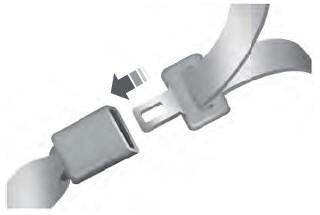

Copyright © 2026 www.liaviator2.com