
Lincoln Aviator 2020-2026 Service Manual / Electrical / Climate Control System / Climate Control System - General Information / Removal and Installation - Air Distribution Door Actuator
Lincoln Aviator: Climate Control System - General Information / Removal and Installation - Air Distribution Door Actuator
Removal
-
Fully lower the glove compartment.
-
Disconnect the check strap.
-
Push the stop tabs inward.
-
Disconnect the check strap.
.jpg) |
-
Remove the screws and the air distribution door actuator.
-
Disconnect the electrical connector.
-
Disconnect the electrical connector.
.jpg) |
Installation
-
To install, reverse the removal procedure.
 Removal and Installation - Air Conditioning (A/C) Pressure Transducer - 3.0L EcoBoost
Removal
NOTE:
Removal steps in this procedure may contain installation details.
Disconnect the electrical connector and remove the A/C pressure transducer...
 Removal and Installation - Air Inlet Door Actuator
Removal
Remove the climate control housing.
Refer to: Climate Control Housing (412-00 Climate Control System - General Information, Removal and Installation)...
Other information:
Lincoln Aviator 2020-2026 Service Manual: General Procedures - High Voltage Battery Leak Test - Plug-In Hybrid Electric Vehicle (PHEV)
Leak detection NOTE: This test is meant to be a secondary check after a service procedure is performed on the high voltage battery when a seal is disturbed. It is important to follow the workshop manual service procedure to verify a high voltage battery is sealed correctly...
Lincoln Aviator 2020-2026 Service Manual: Removal and Installation - Glove Compartment
Special Tool(s) / General Equipment Interior Trim Remover Removal NOTE: Removal steps in this procedure may contain installation details. Release the clips and remove the finish panel. Use the General Equipment: Interior Trim Remover Release the clips and remove the switch...
Categories
- Manuals Home
- Lincoln Aviator Owners Manual
- Lincoln Aviator Service Manual
- Fuel Quality
- Locking and Unlocking
- Changing the Front Wiper Blades - Vehicles With: Heated Wiper Blades
- New on site
- Most important about car
Locking and Unlocking the Doors from Inside
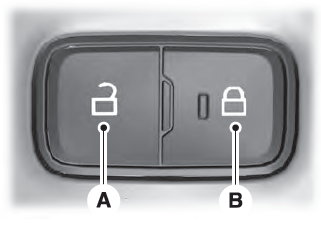
Locking the Doors
Press the lock switch on the door interior trim panel. The doors can no longer be released using the exterior door handle switches and the luggage compartment locks.

Copyright © 2026 www.liaviator2.com