
Lincoln Aviator 2020-2025 Service Manual / Powertrain / Automatic Transmission / Automatic Transmission - 10-Speed Automatic Transmission – 10R60 / Removal and Installation - Intermediate Speed Sensor A (ISSA)
Lincoln Aviator: Automatic Transmission - 10-Speed Automatic Transmission – 10R60 / Removal and Installation - Intermediate Speed Sensor A (ISSA)
Removal
-
Remove the main control valve body.
Refer to: Main Control Valve Body (307-01A Automatic Transmission - 10-Speed Automatic Transmission – 10R60, Removal and Installation).
-
Remove the intermediate speed sensor A.
-
Slide the plastic lock to the unlocked position.
While pressing the plastic tab, disconnect the electrical connector.
-
Remove the bolt and the intermediate speed sensor A.
-
Slide the plastic lock to the unlocked position.
While pressing the plastic tab, disconnect the electrical connector.
.jpg) |
Installation
-
Install the intermediate speed sensor A.
-
Install the intermediate speed sensor A bolt.
Torque: 62 lb.in (7 Nm)
-
Connect the electrical connector. Slide the plastic lock to the locked position.
-
Install the intermediate speed sensor A bolt.
.jpg) |
-
Install the main control valve body.
Refer to: Main Control Valve Body (307-01A Automatic Transmission - 10-Speed Automatic Transmission – 10R60, Removal and Installation).
 General Procedures - Transmission Strategy Download
Programming
This procedure should be performed when a new
transmission or main control valve body is installed in the vehicle.
13 - digit solenoid body strategy
12 - digit solenoid body identification
If a new main control was installed, record the
13-digit solenoid body strategy from the replacement solenoid body tag
provided with the main control service kit...
 Removal and Installation - Intermediate Speed Sensor B (ISSB)
Removal
Remove the main control valve body.
Refer to: Main Control Valve Body (307-01A Automatic Transmission - 10-Speed Automatic Transmission – 10R60, Removal and Installation)...
Other information:
Lincoln Aviator 2020-2025 Service Manual: Description and Operation - Gasoline and Gasoline-Ethanol Fuel Systems Health and Safety Precautions
WARNING: Before working on or disconnecting any of the fuel tubes or fuel system components, relieve the fuel system pressure to prevent accidental spraying of fuel. Fuel in the fuel system remains under high pressure, even when the engine is not running...
Lincoln Aviator 2020-2025 Service Manual: Diagnosis and Testing - DTC Chart and Pinpoint Tests
Diagnostic Trouble Code (DTC) Chart Diagnostics in this manual assume a certain skill level and knowledge of Ford-specific diagnostic practices. REFER to: Diagnostic Methods (100-00 General Information, Description and Operation). Diagnostic Trouble Code Chart Module DTC Description Action ATCM B11D9:16 Vehicle Battery: Circuit Voltage Below Threshold GO to Pinpoint Test A ATCM B11D9:17 Vehicle Battery: Circuit Voltage Above Threshold GO to Pinpoint Test A ATCM U0140:00 Lost Communication With Body Control Module: No Sub Type Information GO to Pinpoint Test B ATCM U2002:9E Switch: Stuck On GO to Pinpoint Test C ATCM U2009:9E Rotary Encoder: Stuck On GO to Pinpoint Test D ATCM U3000:04 Control Module: System Internal Failure GO to Pinpoint Test D AWD C00A1:57 Driveline Control Module: Invalid / Incompatible Software Component GO to Pinpoint Test E AWD C00A1:F1 Driveline Control Module: <Manufacturer Defined> GO to Pinpoint Test E AWD C00A5:01 Driveline Control Module Transfer Case Unit Control Circuit Driver: General Electrical Failure GO to Pinpoint Test E AWD C00A5:08 Driveline Control Module Transfer Case Unit Control Circuit Driver: Bus Signal / Message Failure GO to Pinpoint Test E AWD C00A5:19 Driveline Control Module Transfer Case Unit Control Circuit Drive: Circuit Current Above Threshold GO to Pinpoint Test E AWD C00A5:1C Driveline Control Module Transfer Case Unit Control Circuit Driver: Circuit Voltage Out of Range GO to Pinpoint Test E AWD C00A5:49 Driveline Control Module Transfer Case Unit Control Circuit Drive: Internal Electronic Failure GO to Pinpoint Test E AWD C00A5:4B Driveline Control Module Transfer Case Unit Control Circuit Drive: Over Temperature GO to Pinpoint Test E AWD C00A5:96 Driveline Control Module Transfer Case Unit Control Circuit Drive: Component Internal Failure GO to Pinpoint Test E AWD C00A6:18 4WD/AWD Transfer Case Unit Actuator: Circuit Current Below Threshold GO to Pinpoint Test F AWD C00A6:19 4WD/AWD Transfer Case Unit Actuator: Circuit Current Above Threshold GO to Pinpoint Test F AWD C00A6:4B 4WD/AWD Transfer Case Unit Actuator: Over Temperature GO to Pinpoint Test G AWD C00A6:54 4WD/AWD Transfer Case Unit Actuator: Missing Calibration GO to Pinpoint Test H AWD C00A6:66 4WD/AWD Transfer Case Unit Actuator: Signal Has Too Many Transitions/Events GO to Pinpoint Test I AWD C00A6:71 4WD/AWD Transfer Case Unit Actuator: Actuator Stuck GO to Pinpoint Test F AWD C00A6:74 4WD/AWD Transfer Case Unit Actuator: Actuator Slipping GO to Pinpoint Test F AWD C00A6:99 4WD/AWD Transfer Case Unit Actuator: Exceeded Learning Limit GO to Pinpoint Test F AWD C00A7:11 4WD/AWD Transfer Case Unit Actuator Position Sensor "A": Circuit Short To Ground GO to Pinpoint Test J AWD C00A7:13 4WD/AWD Transfer Case Unit Actuator Position Sensor "A": Circuit Open GO to Pinpoint Test J AWD C00A7:17 4WD/AWD Transfer Case Unit Actuator Position Sensor "A": Circuit Voltage Above Threshold GO to Pinpoint Test J AWD C00A8:11 4WD/AWD Transfer Case Unit Actuator Position Sensor "B": Circuit Short To Ground GO to Pinpoint Test K AWD C00A8:13 4WD/AWD Transfer Case Unit Actuator Position Sensor "B": Circuit Open GO to Pinpoint Test K AWD C00A8:17 4WD/AWD Transfer Case Unit Actuator Position Sensor "B": Circuit Voltage Above Threshold GO to Pinpoint Test K AWD P0562:00 System Voltage Low: No Sub Type Information GO to Pinpoint Test E AWD P0563:00 System Voltage high: No Sub Type Information GO to Pinpoint Test E AWD P0603:00 Internal Control Module Keep Alive Memory (KAM) Error: No Sub Type Information GO to Pinpoint Test E AWD P0604:00 Internal Control Module Random Access Memory (RAM) Error: No Sub Type Information GO to Pinpoint Test E AWD P0605:00 Internal Control Module Read Only Memory (ROM) Error: No Sub Type Information GO to Pinpoint Test E AWD P0607:00 Control Module Performance: No Sub Type Information GO to Pinpoint Test E AWD P060A:00 Internal Control Module Monitoring Processor Performance: No Sub Type Information GO to Pinpoint Test E AWD P060B:00 Internal Control Module A/D Processing Performance: No Sub Type Information GO to Pinpoint Test E AWD P060C:00 Internal Control Module Main Processor Performance: No Sub Type Information GO to Pinpoint Test E AWD P0630:00 VIN Not Programmed or Incompatible - ECM/PCM: No Sub Type Information GO to Pinpoint Test L AWD P064F:00 Unauthorized Software/Calibration Detected: No Sub Type Information GO to Pinpoint Test E AWD P068A:00 ECM/PCM Power Relay De-Energized - Too Early: No Sub Type Information GO to Pinpoint Test E AWD P1001:00 KOER Not Able to Complete, KOER Aborted: No Sub Type Information GO to Pinpoint Test M AWD P1397:01 System Voltage Out Of Self-Test Range: General Electrical Failure GO to Pinpoint Test M AWD P1501:00 Vehicle Speed Sensor Out Of Self Test Range: No Sub Type Information GO to Pinpoint Test M AWD P160A:00 Control Module Vehicle Options Reconfiguration Error: No Sub Type Information GO to Pinpoint Test L AWD P166E:00 Internal control module all wheel drive discounnect control performance: No Sub Type Information GO to Pinpoint Test N AWD P1674:00 Control Module Software Corrupted: No Sub Type Information GO to Pinpoint Test E AWD P1705:00 Transmission Range Circuit Not Indicating Park/Neutral During Self-Test: No Sub Type Information GO to Pinpoint Test M AWD U0100:00 Lost Communication With ECM/PCM "A": No Sub Type Information GO to Pinpoint Test O AWD U0101:00 Lost Communication with TCM: No Sub Type Information GO to Pinpoint Test O AWD U0121:00 Lost Communication With Anti-Lock Brake System (ABS) Control Module "A": No Sub Type Information GO to Pinpoint Test O AWD U0126:00 Lost Communication With Steering Angle Sensor Module: No Sub Type Information GO to Pinpoint Test O AWD U0137:00 Lost Communication With Trailer Brake Control Module: No Sub Type Information GO to Pinpoint Test O AWD U0138:00 Lost Communication with All Terrain Control Module: No Sub Type Information GO to Pinpoint Test O AWD U0140:00 Lost Communication With Body Control Module: No Sub Type Information GO to Pinpoint Test O AWD U0146:00 Lost Communication With Serial Data Gateway "A": No Sub Type Information GO to Pinpoint Test O AWD U0151:00 Lost Communication With Restraints Control Module: No Sub Type Information GO to Pinpoint Test O AWD U0155:00 Lost Communication With Instrument Panel Cluster (IPC) Control Module: No Sub Type Information GO to Pinpoint Test O AWD U0164:00 Lost Communication With HVAC Control Module: No Sub Type Information GO to Pinpoint Test O AWD U0212:00 Lost Communication With Steering Column Control Module: No Sub Type Information GO to Pinpoint Test O AWD U0402:00 Invalid Data Received from TCM: No Sub Type Information GO to Pinpoint Test P AWD U0415:00 Invalid Data Received from Anti-Lock Brake System (ABS) Control Module "A": No Sub Type Information GO to Pinpoint Test P AWD U0422:00 Invalid Data Received From Body Control Module: No Sub Type Information GO to Pinpoint Test P AWD U0423:00 Invalid Data Received from Instrument Panel Cluster Control Module: No Sub Type Information GO to Pinpoint Test P AWD U0428:00 Invalid Data Received From Steering Angle Sensor Module: No Sub Type Information GO to Pinpoint Test P AWD U1012:00 Invalid Internal Control Module Monitoring Data Received from Anti-Lock Brake System (ABS) Control Module: No Sub Type Information GO to Pinpoint Test P AWD U1014:00 Invalid Internal Control Module Monitoring Data Received from Restraints Control Module: No Sub Type Information GO to Pinpoint Test P AWD U2100:00 Initial Configuration Not Complete: No Sub Type Information GO to Pinpoint Test L AWD U2101:00 Control Module Configuration Incompatible: No Sub Type Information GO to Pinpoint Test L AWD U2200:00 Control Module Configuration Memory Corrupt: No Sub Type Information GO to Pinpoint Test L Global Customer Symptom Code (GCSC) Chart Diagnostics in this manual assume a certain skill level and knowledge of Ford-specific diagnostic practices...
Categories
- Manuals Home
- Lincoln Aviator Owners Manual
- Lincoln Aviator Service Manual
- Body and Paint
- Remove and Reinstall the Battery
- Changing the Front Wiper Blades - Vehicles With: Heated Wiper Blades
- New on site
- Most important about car
Child Seats
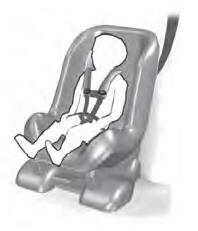
Use a child restraint (sometimes called an infant carrier, convertible seat, or toddler seat) for infants, toddlers and children weighing 40 lb (18 kg) or less (generally four-years-old or younger).
Using Lap and Shoulder Belts
WARNING: Do not place a rearward facing child restraint in front of an active airbag. Failure to follow this instruction could result in personal injury or death.

Copyright © 2025 www.liaviator2.com