
Lincoln Aviator: Transfer Case / Removal and Installation - Transfer Case Input Shaft Seal
Special Tool(s) /
General Equipment
.jpg) |
205-1018 Installation Tube |
.jpg) |
308-943 Installer, Input Seal |
Removal
-
With the vehicle in NEUTRAL, position it on a hoist.
Refer to: Jacking and Lifting (100-02 Jacking and Lifting, Description and Operation).
-
Remove the transfer case.
Refer to: Transfer Case (307-07B Transfer Case, Removal).
-
Remove the transfer case input shaft seal.
Installation
-
NOTE:
Apply petroleum jelly to the outer circumference of the oil seal.
Use Special Service Tool: 205-1018
Installation Tube.
, 308-943
Installer, Input Seal.
-
Install the transfer case.
Refer to: Transfer Case (307-07B Transfer Case, Installation).
Special Tool(s) /
General Equipment
205-1018Installation Tube
205-1067Installer, Output Shaft AWD
Removal
With the vehicle in NEUTRAL, position it on a hoist...
Special Tool(s) /
General Equipment
205-072Universal Flange Holding Wrench
205-1018Installation Tube
205-1067Installer, Output Shaft AWD
205-D027
(D80L-1013-A)
2 or 3 Jaw Puller
Removal
With the vehicle in NEUTRAL, position it on a hoist...
Other information:
Diagnostic Trouble Code (DTC) Chart
Diagnostics in this manual assume a certain skill level and knowledge of Ford-specific diagnostic practices. REFER to: Diagnostic Methods (100-00 General Information, Description and Operation).
Diagnostic Trouble Code Chart
Module
DTC
Description
Action
BCM
B109F:01
Intrusion Sensor Module: General Electrical Failure
GO to Pinpoint Test B
BCM
B109F:02
Intrusion Sensor Module: General Signal Failure
GO to Pinpoint Test B
BCM
B109F:08
Intrusion Sensor Module: Bus Signal / Message Failure
GO to Pinpoint Test B
BCM
B109F:49
Intrusion Sensor Module: Internal Electric Failure
GO to Pinpoint Test E
BCM
B109F:55
Intrusion Sensor Module: Not Configured
GO to Pinpoint Test F
BCM
B109F:97
Intrusion Sensor Module: Component or System Operation Obstructed or Blocked
GO to Pinpoint Test B
BCM
B109F:9A
Intrusion Sensor Module: Component or System Operating Conditions
GO to Pinpoint Test B
BCM
B1305:01
Hood Switch: General Electrical Failure
GO to Pinpoint Test D
BCM
B1305:11
Hood Switch: Circuit Short To Ground
GO to Pinpoint Test D
BCM
B1305:15
Hood Switch: Circuit Short To Battery or Open
GO to Pinpoint Test D
Symptom Chart
Symptom Chart: Anti-Theft - Perimeter
Diagnostics
in this manual assume a certain skill level and knowledge of
Ford-specific diagnostic practices...
Diagnostic Trouble Code (DTC) Chart
Diagnostics in this manual assume a certain skill level and knowledge of Ford-specific diagnostic practices.REFER to: Diagnostic Methods (100-00 General Information, Description and Operation).
Diagnostic Trouble Code Chart
Module
DTC
Description
Action
PCM
P0300:00
Random Misfire Detected: No Sub Type Information
GO to Pinpoint Test HD
PCM
P0301:00
Cylinder 1 Misfire Detected: No Sub Type Information
GO to Pinpoint Test HD
PCM
P0302:00
Cylinder 2 Misfire Detected: No Sub Type Information
GO to Pinpoint Test HD
PCM
P0303:00
Cylinder 3 Misfire Detected: No Sub Type Information
GO to Pinpoint Test HD
PCM
P0304:00
Cylinder 4 Misfire Detected: No Sub Type Information
GO to Pinpoint Test HD
PCM
P0305:00
Cylinder 5 Misfire Detected: No Sub Type Information
GO to Pinpoint Test HD
PCM
P0306:00
Cylinder 6 Misfire Detected: No Sub Type Information
GO to Pinpoint Test HD
PCM
P0307:00
Cylinder 7 Misfire Detected: No Sub Type Information
GO to Pinpoint Test HD
PCM
P0308:00
Cylinder 8 Misfire Detected: No Sub Type Information
GO to Pinpoint Test HD
PCM
P0313:00
Misfire Detected With Low Fuel: No Sub Type Information
GO to Pinpoint Test HD
PCM
P0316:00
Misfire Detected On Startup (First 1000 Revolutions): No Sub Type Information
GO to Pinpoint Test HD
PCM
P0325:00
Knock/Combustion Vibration Sensor A Circuit: No Sub Type Information
GO to Pinpoint Test DG
PCM
P0327:00
Knock/Combustion Vibration Sensor A Circuit Low: No Sub Type Information
GO to Pinpoint Test DG
PCM
P0328:00
Knock/Combustion Vibration Sensor A Circuit High: No Sub Type Information
GO to Pinpoint Test DG
PCM
P032A:00
Knock/Combustion Vibration Sensor C Circuit: No Sub Type Information
GO to Pinpoint Test DG
PCM
P032C:00
Knock/Combustion Vibration Sensor C Circuit Low: No Sub Type Information
GO to Pinpoint Test DG
PCM
P032D:00
Knock/Combustion Vibration Sensor C Circuit High: No Sub Type Information
GO to Pinpoint Test DG
PCM
P0330:00
Knock/Combustion Vibration Sensor B Circuit: No Sub Type Information
GO to Pinpoint Test DG
PCM
P0332:00
Knock/Combustion Vibration Sensor B Circuit Low: No Sub Type Information
GO to Pinpoint Test DG
PCM
P0333:00
Knock/Combustion Vibration Sensor B Circuit High: No Sub Type Information
GO to Pinpoint Test DG
PCM
P033A:00
Knock/Combustion Vibration Sensor D Circuit: No Sub Type Information
GO to Pinpoint Test DG
PCM
P033C:00
Knock/Combustion Vibration Sensor D Circuit Low: No Sub Type Information
GO to Pinpoint Test DG
PCM
P033D:00
Knock/Combustion Vibration Sensor D Circuit High: No Sub Type Information
GO to Pinpoint Test DG
PCM
P0351:00
Ignition Coil A Primary Control Circuit/Open: No Sub Type Information
GO to Pinpoint Test JF
PCM
P0352:00
Ignition Coil B Primary Control Circuit/Open: No Sub Type Information
GO to Pinpoint Test JF
PCM
P0353:00
Ignition Coil C Primary Control Circuit/Open: No Sub Type Information
GO to Pinpoint Test JF
PCM
P0354:00
Ignition Coil D Primary Control Circuit/Open: No Sub Type Information
GO to Pinpoint Test JF
PCM
P0355:00
Ignition Coil E Primary Control Circuit/Open: No Sub Type Information
GO to Pinpoint Test JF
PCM
P0356:00
Ignition Coil F Primary Control Circuit/Open: No Sub Type Information
GO to Pinpoint Test JF
PCM
P0357:00
Ignition Coil G Primary Control Circuit/Open: No Sub Type Information
GO to Pinpoint Test JF
PCM
P0358:00
Ignition Coil H Primary Control Circuit/Open: No Sub Type Information
GO to Pinpoint Test JF
PCM
P06B6:00
Internal Control Module Knock Sensor Processor 1 Performance: No Sub Type Information
GO to Pinpoint Test DG
PCM
P06D1:00
Internal Control Module Ignition Coil Control Module Performance: No Sub Type Information
GO to Pinpoint Test JF
PCM
P112A:00
Too Many Engine Starts During Factory/Transport Mode: No Sub Type Information
GO to Pinpoint Test JB
PCM
P130D:00
Engine Knock/Combustion Performance - Forced Limited Power: No Sub Type Information
GO to Pinpoint Test DG
PCM
P2300:00
Ignition Coil A Primary Control Circuit Low: No Sub Type Information
GO to Pinpoint Test JF
PCM
P2301:00
Ignition Coil A Primary Control Circuit High: No Sub Type Information
GO to Pinpoint Test JF
PCM
P2303:00
Ignition Coil B Primary Control Circuit Low: No Sub Type Information
GO to Pinpoint Test JF
PCM
P2304:00
Ignition Coil B Primary Control Circuit High: No Sub Type Information
GO to Pinpoint Test JF
PCM
P2306:00
Ignition Coil C Primary Control Circuit Low: No Sub Type Information
GO to Pinpoint Test JF
PCM
P2307:00
Ignition Coil C Primary Control Circuit High: No Sub Type Information
GO to Pinpoint Test JF
PCM
P2309:00
Ignition Coil D Primary Control Circuit Low: No Sub Type Information
GO to Pinpoint Test JF
PCM
P2310:00
Ignition Coil D Primary Control Circuit High: No Sub Type Information
GO to Pinpoint Test JF
PCM
P2312:00
Ignition Coil E Primary Control Circuit Low: No Sub Type Information
GO to Pinpoint Test JF
PCM
P2313:00
Ignition Coil E Primary Control Circuit High: No Sub Type Information
GO to Pinpoint Test JF
PCM
P2315:00
Ignition Coil F Primary Control Circuit Low: No Sub Type Information
GO to Pinpoint Test JF
PCM
P2316:00
Ignition Coil F Primary Control Circuit High: No Sub Type Information
GO to Pinpoint Test JF
PCM
P2319:00
Ignition Coil G Primary Control Circuit High: No Sub Type Information
GO to Pinpoint Test JF
PCM
P2322:00
Ignition Coil H Primary Control Circuit High: No Sub Type Information
GO to Pinpoint Test JF
Global Customer Symptom Code (GCSC) Chart
Diagnostics in this manual assume a certain skill level and knowledge of Ford-specific diagnostic practices...
Categories
The front outboard and rear safety restraints
in the vehicle are combination lap and
shoulder belts.
Insert the belt tongue into the proper
buckle (the buckle closest to the direction
the tongue is coming from) until you hear
a snap and feel it latch. Make sure that
you securely fasten the tongue in the
buckle.
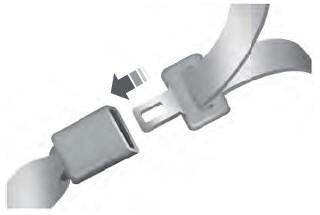
To unfasten, press the release button
and remove the tongue from the buckle.
read more