
Lincoln Aviator: Tire Pressure Monitoring System / Changing Tires With a Tire Pressure Monitoring System
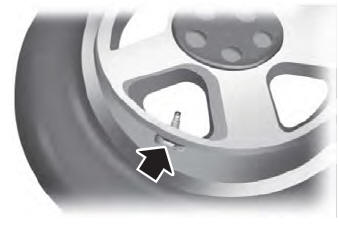
Note: Each road tire is equipped with a tire pressure sensor located inside the wheel and tire assembly cavity. The pressure sensor is attached to the valve stem. The pressure sensor is covered by the tire and is not visible unless the tire is removed. Take care when changing the tire to avoid damaging the sensor.
You should always have your tires serviced by an authorized dealer.
Check the tire pressure periodically (at least monthly) using an accurate tire gauge.
 Tire Pressure Monitoring System
WARNING: The tire pressure
monitoring system is not a substitute for
manually checking tire pressures. You
should periodically check tire pressures
using a pressure gauge...
 Understanding Your Tire Pressure Monitoring System
The tire pressure monitoring system
measures pressure in your road tires and
sends the tire pressure readings to your
vehicle. You can view the tire pressure
readings through the information displa...
Other information:
Lincoln Aviator 2020-2026 Service Manual: Removal and Installation - Front Parking Aid Camera Washer Jet
Removal NOTE: Removal steps in this procedure may contain installation details. Remove the front parking aid camera. Refer to: Front Parking Aid Camera (413-13B Parking Aid - Vehicles With: Parking Aid Camera, Removal and Installation)...
Lincoln Aviator 2020-2026 Service Manual: Removal and Installation - Desiccant Bag - 3.0L EcoBoost
Special Tool(s) / General Equipment Long Nose Pliers Removal NOTICE: During the removal of components, cap, tape or otherwise appropriately protect all openings to prevent the ingress of dirt or other contamination. Remove protective materials prior to installation...
Categories
- Manuals Home
- Lincoln Aviator Owners Manual
- Lincoln Aviator Service Manual
- Remove and Reinstall the Battery
- Opening and Closing the Hood
- Disabling Auto-Start-Stop
- New on site
- Most important about car
Child Safety Locks
When the child safety locks are set, you cannot open the rear doors from the inside.
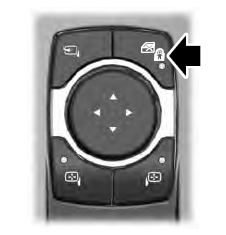
The child safety lock control is on the driver door.
Press the control to switch the child safety locks on. Press the control again to switch them off. A light on the child safety control illuminates when you switch them on.
