
Lincoln Aviator: Rear View Mirrors / General Procedures - Power Mirrors Synchronization
Synchronization
NOTE: The power folding mirrors may need to be synchronized any time the mirrors are folded or unfolded without using the folding switch, or if a new power folding mirror is installed.
NOTE: The power telescoping mirrors may need to be synchronized any time the mirrors are extended or retracted without using the telescoping switch, or if a new power telescoping mirror is installed.
NOTE: If the power folding or power telescoping mirrors are continuously electronically moved, the power lockout feature disables the system for approximately 3-10 minutes to prevent damage to the power fold or power telescope motors. After 3-10 minutes have elapsed, normal operation resumes.
NOTE: The truck power folding mirror procedure is shown in the videos; other vehicles and power telescoping mirror procedure are similar.
-
Fold or retract both mirrors by hand.
-
Using the power folding/power telescoping mirror switch, operate the mirrors until an audible click is heard.
-
Operate the power folding or power telescoping mirrors an additional 3 to 4 times to synchronize the mirrors.
-
For vehicles equipped with the mirror control switch
integral to the window switch, refer to the video below.
Click here to view a video version of this procedure.
.png)
-
For vehicles equipped with the stand alone mirror control switch, refer to the video below.
Click here to view a video version of this procedure.
 Diagnosis and Testing - Rear View Mirrors
DTC Chart: DDM
Diagnostics in this manual assume a certain skill level and knowledge of Ford-specific diagnostic practices. REFER to: Diagnostic Methods (100-00 General Information, Description and Operation)...
 Removal and Installation - Exterior Mirror
Special Tool(s) /
General Equipment
Flat Headed Screw Driver
Removal
NOTE:
Removal steps in this procedure may contain installation details...
Other information:
Lincoln Aviator 2020-2026 Service Manual: Assembly - Transmission Case
Special Tool(s) / General Equipment 204-594Forcing screw 307-549Installer, Shift Shaft Fluid SealTKIT-2005D1-F1 307-648Remover/Installer, Rear BearingTKIT-2009C-FTKIT-2009C-ROW 307-745Installer, Park Sleeve Roll Pin 307-781Needle bearing remover/Installer 307-788Installer, sleeve 307-789Installer, sleeve NOTE: This step is only necessary if the transmission case is being replaced...
Lincoln Aviator 2020-2026 Service Manual: Removal and Installation - High Voltage Battery Junction Box - Plug-In Hybrid Electric Vehicle (PHEV)
Removal WARNING: To prevent the risk of high-voltage shock, always follow precisely all warnings and service instructions, including instructions to depower the system. The high-voltage system utilizes approximately 450 volts DC, provided through high-voltage cables to its components and modules...
Categories
- Manuals Home
- Lincoln Aviator Owners Manual
- Lincoln Aviator Service Manual
- Fuel Quality
- Locking and Unlocking
- Interior Lamps
- New on site
- Most important about car
Remote Control
Passive Key
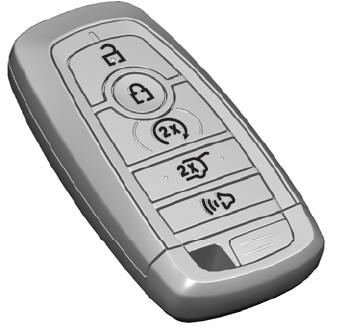
The passive key operates the power locks and the remote start system. The passive key must be in your vehicle to use the push button start.
Note: You may not be able to shift out of park (P) unless the passive key is inside your vehicle.
