
Lincoln Aviator 2020-2026 Owners Manual / Parking Aids / Rear View Camera / Object Distance Indicator (If Equipped)
Lincoln Aviator: Rear View Camera / Object Distance Indicator (If Equipped)
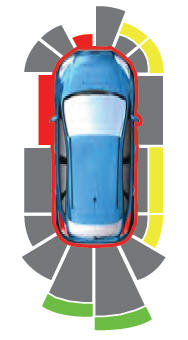
The system provides an image of your vehicle and the sensor zones. The zones highlight green, yellow and red when the parking aid sensors detect an object in the coverage area.
 Using the Rear View Camera System
The rear view camera system displays what
is behind your vehicle when you place the
transmission in reverse (R).
Note: The reverse sensing system is not
effective at speeds above 3 mph (5 km/h)
and may not detect certain angular or
moving objects...
 Rear Camera On Demand (If Equipped)
Press the camera button while in park (P),
neutral (N) or drive (D) and under a speed of
6 mph (10 km/h) to bring up the rear camera
view in the display screen...
Other information:
Lincoln Aviator 2020-2026 Service Manual: Diagnosis and Testing - Fuel System - 3.0L EcoBoost
Symptom Chart(s) Symptom Chart: Fuel System Diagnostics in this manual assume a certain skill level and knowledge of Ford-specific diagnostic practices. REFER to: Diagnostic Methods (100-00 General Information, Description and Operation). for information regarding Ford-specific diagnostic practices...
Lincoln Aviator 2020-2026 Service Manual: Removal and Installation - Front Seat Power Lumbar Assembly - Vehicles Without: Multi-Contour Seats
Removal NOTE: Driver seat shown, passenger seat similar. Remove the front seat. Refer to: Front Seat (501-10A Front Seats, Removal and Installation). Remove the front seat backrest panel. Refer to: Front Seat Backrest Panel (501-10A Front Seats, Removal and Installation)...
Categories
- Manuals Home
- Lincoln Aviator Owners Manual
- Lincoln Aviator Service Manual
- USB Port and Power Point Locations
- Opening and Closing the Hood
- Interior Lamps
- New on site
- Most important about car
Remote Control
Passive Key
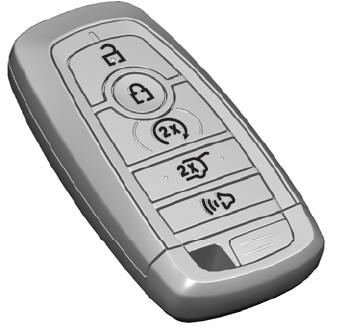
The passive key operates the power locks and the remote start system. The passive key must be in your vehicle to use the push button start.
Note: You may not be able to shift out of park (P) unless the passive key is inside your vehicle.

Copyright © 2026 www.liaviator2.com