
Lincoln Aviator 2020-2026 Service Manual / Body and Paint / Body and Paint / Handles, Locks, Latches and Entry Systems / Removal and Installation - Exterior Rear Door Handle
Lincoln Aviator: Handles, Locks, Latches and Entry Systems / Removal and Installation - Exterior Rear Door Handle
Removal
NOTE: LH (left-hand) side shown, RH (right-hand) side similar.
NOTE: Removal steps in this procedure may contain installation details.
-
Remove the rear door window regulator and motor.
Refer to: Rear Door Window Regulator and Motor (501-11 Glass, Frames and Mechanisms, Removal and Installation).
-
NOTE: Rear door shown transparent for clarity.
Remove the aft rear door glass run and bracket.
-
Remove the bolts from the aft rear door glass run and bracket.
Torque: 93 lb.in (10.5 Nm)
-
Remove the aft rear door glass run and bracket.
-
Remove the bolts from the aft rear door glass run and bracket.
.jpg) |
-
NOTE: Rear door shown transparent for clarity.
Disconnect the exterior rear door handle electrical connector and position the wiring harness aside.
.jpg) |
-
Remove the exterior rear door handle reinforcement adhesive tape covers.
.jpg) |
-
NOTE: Rear door shown transparent for clarity.
Remove the exterior rear door handle and the exterior rear door handle reinforcement.
-
Remove the exterior rear door handle reinforcement nuts.
Torque: 80 lb.in (9 Nm)
-
Remove the exterior rear door handle reinforcement nut.
-
Remove the exterior rear door handle.
-
Remove the exterior rear door handle reinforcement nuts.
.jpg) |
-
Remove the exterior rear door handle gaskets.
.jpg) |
Installation
-
To install, reverse the removal procedure.
-
Carry out the power door window initialization.
Refer to: Power Door Window Initialization (501-11 Glass, Frames and Mechanisms, General Procedures).
 Removal and Installation - Exterior Front Door Handle Reinforcement
Removal
NOTE:
LH (left-hand) side shown, RH (right-hand) side similar.
NOTE:
Removal steps in this procedure may contain installation details.
Remove the front door window regulator and motor...
 Removal and Installation - Exterior Rear Door Handle Reinforcement
Removal
NOTE:
LH (left-hand) side shown, RH (right-hand) side similar.
NOTE:
Removal steps in this procedure may contain installation details.
Remove the rear door window regulator and motor...
Other information:
Lincoln Aviator 2020-2026 Owners Manual: Rear Passenger Climate Controls
Use the rear passenger touchscreen to select the following: Touch the climate button on the feature bar to access the rear passenger climate control screen. Rear Passenger Climate Control Screen Selecting a Row Touch 2nd Row to control the second row climate...
Lincoln Aviator 2020-2026 Service Manual: Removal and Installation - Roof Front Frame
Special Tool(s) / General Equipment Resistance Spotwelding Equipment Spot Weld Drill Bit Locking Pliers Removal WARNING: Before beginning any service procedure in this manual, refer to health and safety warnings in section 100-00 General Information...
Categories
- Manuals Home
- Lincoln Aviator Owners Manual
- Lincoln Aviator Service Manual
- General Procedures - Transmission Fluid Drain and Refill
- Garage Door Opener
- Opening and Closing the Hood
- New on site
- Most important about car
Fastening the Seatbelts
The front outboard and rear safety restraints in the vehicle are combination lap and shoulder belts.
Insert the belt tongue into the proper buckle (the buckle closest to the direction the tongue is coming from) until you hear a snap and feel it latch. Make sure that you securely fasten the tongue in the buckle.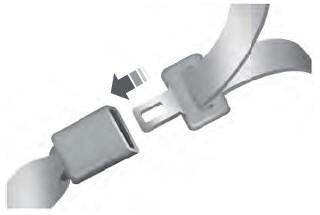

Copyright © 2026 www.liaviator2.com