
Lincoln Aviator 2020-2026 Service Manual / Powertrain / Engine / Engine Cooling - 3.0L EcoBoost / Removal and Installation - Transmission Fluid Heater Coolant Control Valve
Lincoln Aviator: Engine Cooling - 3.0L EcoBoost / Removal and Installation - Transmission Fluid Heater Coolant Control Valve
Special Tool(s) / General Equipment
| Hose Clamp Remover/Installer |
Removal
-
.jpg)
.jpg)
Loosen the pressure relief cap..jpg) WARNING:
When releasing the cooling system pressure, cover the coolant expansion tank cap with a thick cloth.
WARNING:
When releasing the cooling system pressure, cover the coolant expansion tank cap with a thick cloth.
.jpg) |
-
Disconnect the coolant control valve electrical connector.
.jpg) |
-
Clamp off the coolant control valve hoses.
.jpg) |
-
-
Loosen the clamp and disconnect the coolant hose.
-
Release the clamp and disconnect the coolant hoses.
Use the General Equipment: Hose Clamp Remover/Installer
-
Loosen the clamp and disconnect the coolant hose.
.jpg) |
-
Remove the bolt and the transmission fluid heater coolant control valve.
Torque: 62 lb.in (7 Nm)
.jpg) |
Installation
-
To install, reverse the removal procedure.
-
Fill and bleed the cooling system without using a vacuum cooling system filler.
Refer to: Engine Cooling System Draining, Vacuum Filling and Bleeding (303-03A Engine Cooling - 3.0L EcoBoost, General Procedures).
 Removal and Installation - Thermostat
Special Tool(s) /
General Equipment
Hose Clamp Remover/Installer
Removal
NOTE:
Removal steps in this procedure may contain installation details...

Other information:
Lincoln Aviator 2020-2026 Service Manual: General Procedures - Engine Cooling System Draining, Vacuum Filling and Bleeding
Special Tool(s) / General Equipment ROB75240Coolant/Battery Refractometer (Fahrenheit) Fluid Container Cooling System Vacuum Tester and Refiller Draining NOTICE: The coolant must be recovered in a suitable, clean container for reuse...
Lincoln Aviator 2020-2026 Service Manual: Removal and Installation - Rear Halfshaft
Removal NOTICE: Never pick up or hold the halfshaft by only the inner or outer CV joint. Damage to the CV joint will occur. NOTICE: Never use a hammer to remove or install the halfshafts. Damage to the CV joint may occur. NOTICE: Never use the halfshaft assembly as a lever to position other components...
Categories
- Manuals Home
- Lincoln Aviator Owners Manual
- Lincoln Aviator Service Manual
- General Procedures - Transmission Fluid Drain and Refill
- Changing the Front Wiper Blades - Vehicles With: Heated Wiper Blades
- Interior Lamps
- New on site
- Most important about car
Remote Control
Passive Key
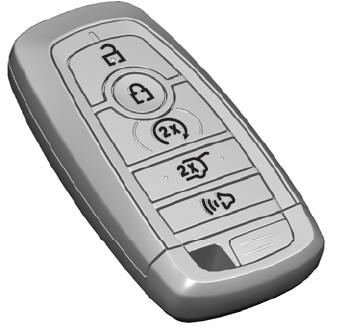
The passive key operates the power locks and the remote start system. The passive key must be in your vehicle to use the push button start.
Note: You may not be able to shift out of park (P) unless the passive key is inside your vehicle.

Copyright © 2026 www.liaviator2.com