
Lincoln Aviator: Tire Care / Tire Rotation Diagram

Rear-wheel drive and all-wheel drive vehicles, front tires at left of diagram.
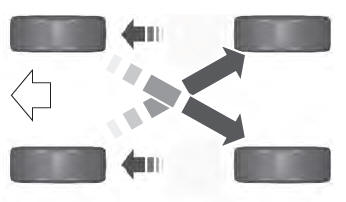
Lincoln Aviator. Tire Rotation Diagram

    Tire Rotation

    WARNING: If the tire label shows different tire pressures for the front and rear tires and the vehicle has a tire pressure monitoring system, then you need to update the settings for the system sensors...

    Using Summer Tires

    Summer tires provide superior performance on wet and dry roads. Summer tires do not have the Mud and Snow (M+S or M/S) tire traction rating on the tire side wall...

    Other information:

    Lincoln Aviator 2020-2026 Service Manual: Description and Operation - Planetary Assembly


    Planetary Gearset Exploded View Item Description 1 Ring gear No. 1 2 Sun gear No. 1 3 Planetary carrier No. 1 4 Sun gear No. 2 5 Planetary carrier No...

    Lincoln Aviator 2020-2026 Service Manual: Diagnosis and Testing - Cruise Control - Vehicles With: Adaptive Cruise Control With Lane Centering


    Diagnostic Trouble Code (DTC) Chart Diagnostics in this manual assume a certain skill level and knowledge of Ford-specific diagnostic practices. REFER to: Diagnostic Methods (100-00 General Information, Description and Operation).   Diagnostic Trouble Code Chart Module   DTC Description Action   CCM B142E:78 Forward Looking Sensor Horizontal Alignment: Alignment or Adjustment Incorrect   GO to Pinpoint Test C   CCM B1433:54 Forward Looking Sensor Horizontal Alignment: Missing Calibration   GO to Pinpoint Test C   CCM C1001:08 Vision System Camera: Bus Signal/Message Failure   GO to Pinpoint Test D   CCM C1A67:96 Forward Looking Sensor: Component Internal Failure   GO to Pinpoint Test F   CCM C1A67:97 Forward Looking Sensor: Component Or System Operation Obstructed Or Blocked   GO to Pinpoint Test G   CCM U2100:00 Initial Configuration Not Complete: No Sub Type Information   GO to Pinpoint Test H   CCM U2300:55 Central Configuration Not Complete: No Sub Type Information   GO to Pinpoint Test H   CCM U3000:41 Control Module: General Checksum Failure   GO to Pinpoint Test I   CCM U3000:42 Control Module: General Memory Failure   GO to Pinpoint Test I   CCM U3000:44 Control Module: Data Memory Failure   GO to Pinpoint Test I   CCM U3000:49 Control Module: Internal Electronic Failure   GO to Pinpoint Test I   CCM U3002:62 Vehicle Identification Number: Signal Compare Failure   GO to Pinpoint Test J   CCM U3003:16 Battery Voltage: Circuit Voltage Below Threshold   GO to Pinpoint Test K   CCM U3003:17 Battery Voltage: Circuit Voltage Above Threshold   GO to Pinpoint Test L   IPMA C1A67:08 Forward Looking Sensor: Bus Signal/Message Failure   GO to Pinpoint Test E   PCM P0504:00 Brake Switch A / B Correlation: No Sub Type Information   GO to Pinpoint Test B   PCM P0572:00 Brake Switch "A" Circuit Low: No Sub Type Information   GO to Pinpoint Test B   PCM P0573:00 Brake Switch "A" Circuit High: No Sub Type Information   GO to Pinpoint Test B   PCM P1703:00 Brake Switch Out Of Self - Test Range: No Sub Type Information   GO to Pinpoint Test B   PCM P1935:00 Brake Switch/Sensor Signal: No Sub Type Information   GO to Pinpoint Test B   SIMA P0564:11 Cruise Control Multi-Function Input "A" Circuit: Circuit Short To Ground   GO to Pinpoint Test A   SIMA P0564:12 Cruise Control Mulit-Function Input "A" Circuit: Circuit Short To Battery   GO to Pinpoint Test A   SIMA P0564:13 Cruise Control Mulit-Function Input "A" Circuit: Circuit Open   GO to Pinpoint Test A   SIMA P0589:11 Cruise Control Multi-Function Input "B" Circuit: Circuit Short To Ground   GO to Pinpoint Test A   SIMA P0589:12 Cruise Control Mulit-Function Input "B" Circuit: Circuit Short To Battery   GO to Pinpoint Test A   SIMA P0589:13 Cruise Control Mulit-Function Input "B" Circuit: Circuit Open   GO to Pinpoint Test A Global Customer Symptom Code (GCSC) Chart Diagnostics in this manual assume a certain skill level and knowledge of Ford-specific diagnostic practices...

    Categories

    Seatbelt Height Adjustment

    WARNING: Position the seatbelt height adjuster so that the seatbelt rests across the middle of your shoulder. Failure to adjust the seatbelt correctly could reduce its effectiveness and increase the risk of injury in a crash.

    Adjust the height of the shoulder belt so the belt rests across the middle of your shoulder. Slide the adjuster up to raise the belt. Press the button and slide it down to lower the belt.

    read more

     
    Copyright © 2026 www.liaviator2.com