
Lincoln Aviator 2020-2026 Owners Manual / Wheels and Tires / Tire Care
Lincoln Aviator: Wheels and Tires / Tire Care
- Information About Uniform Tire Quality Grading
- Treadwear
- Traction AA A B C
- Temperature A B C
- Glossary of Tire Terminology
- Information Contained on the Tire Sidewall. Information on P Type Tires
- Additional Information Contained on the Tire Sidewall for LT Type Tires
- Information on T Type Tires
- Recommended Tire Pressures and Inflating Your Tires
- Inspecting Your Tires and Wheel Valve Stems
- Tire Wear. Damage
- Age
- U.S. DOT Tire Identification Number
- Tire Replacement Requirements
- Safety Practices
- Highway Hazards
- Tire and Wheel Alignment
- Tire Rotation
- Tire Rotation Diagram
 How your vehicle differs from other vehicles
Sport utility vehicles and trucks can differ
from some other vehicles in a few noticeable
ways. Your vehicle could be:
Higher - to allow higher load carrying
capacity and to allow it to travel over
rough terrain without getting hung up or
damaging underbody components...
 Information About Uniform Tire Quality Grading
Tire Quality Grades apply to new
pneumatic passenger car tires. The
Quality grades can be found where
applicable on the tire sidewall between
tread shoulder and maximum section
width...
Other information:
Lincoln Aviator 2020-2026 Owners Manual: Daytime Running Lamps - Vehicles With: Daytime Running Lamps (DRL). Front Fog Lamps
Daytime Running Lamps - Vehicles With: Daytime Running Lamps (DRL) WARNING: The daytime running lamps system does not activate the rear lamps and may not provide adequate lighting during low visibility driving conditions. Make sure you switch the headlamps on, as appropriate, during all low visibility conditions...
Lincoln Aviator 2020-2026 Service Manual: Description and Operation - Perimeter Anti-Theft Alarm - System Operation and Component Description
System Operation System Diagram Item Description 1 BCM 2 Turn Signals 3 Hood Ajar Switch 4 Liftgate Ajar Switch 5 IPC 6 Courtesy Lamps 7 Passive Key 8 RTM 9 RGTM 10 GWM 11 GWM 12 Intrusion Sensor 13 Horn 14 DLC 15 DCME (Left Front Door) 16 Door Ajar Switch 17 Power Liftgate 18 Manual Liftgate 19 DCMF (Right Front Door) 20 Door Ajar Switch 21 DCMG (Left Rear Door) 22 Door Ajar Switch 23 DCMH (Right Rear Door) 24 Door Ajar Switch 25 DDM 26 PDM Network Message Chart BCM Network Input Messages Broadcast Message Originating Module Message Purpose RKE data RTM Used by the BCM to arm/disarm the perimeter alarm or to activate/deactivate the panic alarm...
Categories
- Manuals Home
- Lincoln Aviator Owners Manual
- Lincoln Aviator Service Manual
- Child Safety Locks
- Tire Change Procedure
- Drive Modes
- New on site
- Most important about car
Child Seats
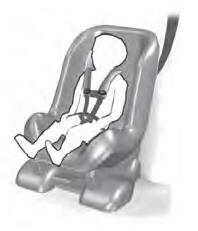
Use a child restraint (sometimes called an infant carrier, convertible seat, or toddler seat) for infants, toddlers and children weighing 40 lb (18 kg) or less (generally four-years-old or younger).
Using Lap and Shoulder Belts
WARNING: Do not place a rearward facing child restraint in front of an active airbag. Failure to follow this instruction could result in personal injury or death.

Copyright © 2026 www.liaviator2.com