
Lincoln Aviator: Cross Traffic Alert / Using Cross Traffic Alert

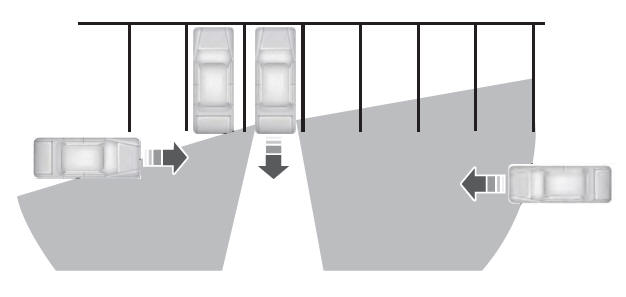
The system detects vehicles that approach at a speed between 4 mph (6 km/h) and 37 mph (60 km/h). Coverage decreases when the sensors are partially, mostly or fully obstructed. Slowly reversing helps increase the coverage area and effectiveness.

The system turns on when you start the engine and you shift into reverse (R). The system turns off when you shift out of reverse (R).
Lincoln Aviator. Using Cross Traffic Alert

The sensor on the left-hand side is only partially obstructed and zone coverage on the right-hand side is maximized.
Lincoln Aviator. Using Cross Traffic Alert

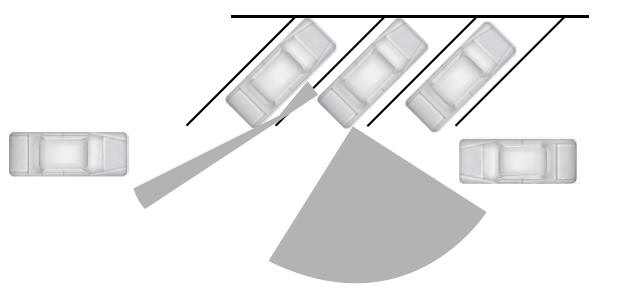
Zone coverage also decreases when parking at narrow angles. The sensor on the left-hand side is mostly obstructed and zone coverage on that side is severely reduced.

    Cross Traffic Alert

    WARNING: Do not use the cross traffic alert system as a replacement for using the interior and exterior mirrors or looking over your shoulder before reversing out of a parking space...

    Cross Traffic Alert System Sensors

    The sensors are behind the rear bumper on both sides of your vehicle. Note: Keep the sensors free from snow, ice and large accumulations of dirt. Note: Do not cover the sensors with bumper stickers, repair compound or other objects...

    Other information:

    Lincoln Aviator 2020-2026 Service Manual: Removal and Installation - Second Row Air Distribution Door Actuator


    Removal NOTE: Removal steps in this procedure may contain installation details. Remove the floor console. Refer to: Floor Console (501-12 Instrument Panel and Console, Removal and Installation). Remove the bolts and the duct section...

    Lincoln Aviator 2020-2026 Service Manual: Diagnosis and Testing - Engine Ignition


    Diagnostic Trouble Code (DTC) Chart Diagnostics in this manual assume a certain skill level and knowledge of Ford-specific diagnostic practices.REFER to: Diagnostic Methods (100-00 General Information, Description and Operation).   Diagnostic Trouble Code Chart Module   DTC Description Action   PCM P0300:00 Random Misfire Detected: No Sub Type Information   GO to Pinpoint Test HD   PCM P0301:00 Cylinder 1 Misfire Detected: No Sub Type Information   GO to Pinpoint Test HD   PCM P0302:00 Cylinder 2 Misfire Detected: No Sub Type Information   GO to Pinpoint Test HD   PCM P0303:00 Cylinder 3 Misfire Detected: No Sub Type Information   GO to Pinpoint Test HD   PCM P0304:00 Cylinder 4 Misfire Detected: No Sub Type Information   GO to Pinpoint Test HD   PCM P0305:00 Cylinder 5 Misfire Detected: No Sub Type Information   GO to Pinpoint Test HD   PCM P0306:00 Cylinder 6 Misfire Detected: No Sub Type Information   GO to Pinpoint Test HD   PCM P0307:00 Cylinder 7 Misfire Detected: No Sub Type Information   GO to Pinpoint Test HD   PCM P0308:00 Cylinder 8 Misfire Detected: No Sub Type Information   GO to Pinpoint Test HD   PCM P0313:00 Misfire Detected With Low Fuel: No Sub Type Information   GO to Pinpoint Test HD   PCM P0316:00 Misfire Detected On Startup (First 1000 Revolutions): No Sub Type Information   GO to Pinpoint Test HD   PCM P0325:00 Knock/Combustion Vibration Sensor A Circuit: No Sub Type Information   GO to Pinpoint Test DG   PCM P0327:00 Knock/Combustion Vibration Sensor A Circuit Low: No Sub Type Information   GO to Pinpoint Test DG   PCM P0328:00 Knock/Combustion Vibration Sensor A Circuit High: No Sub Type Information   GO to Pinpoint Test DG   PCM P032A:00 Knock/Combustion Vibration Sensor C Circuit: No Sub Type Information   GO to Pinpoint Test DG   PCM P032C:00 Knock/Combustion Vibration Sensor C Circuit Low: No Sub Type Information   GO to Pinpoint Test DG   PCM P032D:00 Knock/Combustion Vibration Sensor C Circuit High: No Sub Type Information   GO to Pinpoint Test DG   PCM P0330:00 Knock/Combustion Vibration Sensor B Circuit: No Sub Type Information   GO to Pinpoint Test DG   PCM P0332:00 Knock/Combustion Vibration Sensor B Circuit Low: No Sub Type Information   GO to Pinpoint Test DG   PCM P0333:00 Knock/Combustion Vibration Sensor B Circuit High: No Sub Type Information   GO to Pinpoint Test DG   PCM P033A:00 Knock/Combustion Vibration Sensor D Circuit: No Sub Type Information   GO to Pinpoint Test DG   PCM P033C:00 Knock/Combustion Vibration Sensor D Circuit Low: No Sub Type Information   GO to Pinpoint Test DG   PCM P033D:00 Knock/Combustion Vibration Sensor D Circuit High: No Sub Type Information   GO to Pinpoint Test DG   PCM P0351:00 Ignition Coil A Primary Control Circuit/Open: No Sub Type Information   GO to Pinpoint Test JF   PCM P0352:00 Ignition Coil B Primary Control Circuit/Open: No Sub Type Information   GO to Pinpoint Test JF   PCM P0353:00 Ignition Coil C Primary Control Circuit/Open: No Sub Type Information   GO to Pinpoint Test JF   PCM P0354:00 Ignition Coil D Primary Control Circuit/Open: No Sub Type Information   GO to Pinpoint Test JF   PCM P0355:00 Ignition Coil E Primary Control Circuit/Open: No Sub Type Information   GO to Pinpoint Test JF   PCM P0356:00 Ignition Coil F Primary Control Circuit/Open: No Sub Type Information   GO to Pinpoint Test JF   PCM P0357:00 Ignition Coil G Primary Control Circuit/Open: No Sub Type Information   GO to Pinpoint Test JF   PCM P0358:00 Ignition Coil H Primary Control Circuit/Open: No Sub Type Information   GO to Pinpoint Test JF   PCM P06B6:00 Internal Control Module Knock Sensor Processor 1 Performance: No Sub Type Information   GO to Pinpoint Test DG   PCM P06D1:00 Internal Control Module Ignition Coil Control Module Performance: No Sub Type Information   GO to Pinpoint Test JF   PCM P112A:00 Too Many Engine Starts During Factory/Transport Mode: No Sub Type Information   GO to Pinpoint Test JB   PCM P130D:00 Engine Knock/Combustion Performance - Forced Limited Power: No Sub Type Information   GO to Pinpoint Test DG   PCM P2300:00 Ignition Coil A Primary Control Circuit Low: No Sub Type Information   GO to Pinpoint Test JF   PCM P2301:00 Ignition Coil A Primary Control Circuit High: No Sub Type Information   GO to Pinpoint Test JF   PCM P2303:00 Ignition Coil B Primary Control Circuit Low: No Sub Type Information   GO to Pinpoint Test JF   PCM P2304:00 Ignition Coil B Primary Control Circuit High: No Sub Type Information   GO to Pinpoint Test JF   PCM P2306:00 Ignition Coil C Primary Control Circuit Low: No Sub Type Information   GO to Pinpoint Test JF   PCM P2307:00 Ignition Coil C Primary Control Circuit High: No Sub Type Information   GO to Pinpoint Test JF   PCM P2309:00 Ignition Coil D Primary Control Circuit Low: No Sub Type Information   GO to Pinpoint Test JF   PCM P2310:00 Ignition Coil D Primary Control Circuit High: No Sub Type Information   GO to Pinpoint Test JF   PCM P2312:00 Ignition Coil E Primary Control Circuit Low: No Sub Type Information   GO to Pinpoint Test JF   PCM P2313:00 Ignition Coil E Primary Control Circuit High: No Sub Type Information   GO to Pinpoint Test JF   PCM P2315:00 Ignition Coil F Primary Control Circuit Low: No Sub Type Information   GO to Pinpoint Test JF   PCM P2316:00 Ignition Coil F Primary Control Circuit High: No Sub Type Information   GO to Pinpoint Test JF   PCM P2319:00 Ignition Coil G Primary Control Circuit High: No Sub Type Information   GO to Pinpoint Test JF   PCM P2322:00 Ignition Coil H Primary Control Circuit High: No Sub Type Information   GO to Pinpoint Test JF Global Customer Symptom Code (GCSC) Chart Diagnostics in this manual assume a certain skill level and knowledge of Ford-specific diagnostic practices...

    Categories

    Seatbelt Height Adjustment

    WARNING: Position the seatbelt height adjuster so that the seatbelt rests across the middle of your shoulder. Failure to adjust the seatbelt correctly could reduce its effectiveness and increase the risk of injury in a crash.

    Adjust the height of the shoulder belt so the belt rests across the middle of your shoulder. Slide the adjuster up to raise the belt. Press the button and slide it down to lower the belt.

    read more

     
    Copyright © 2026 www.liaviator2.com