
Lincoln Aviator: Cross Traffic Alert / Cross Traffic Alert System Sensors
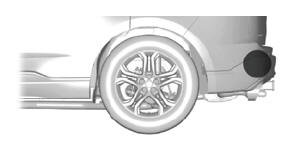
The sensors are behind the rear bumper on both sides of your vehicle.
Note: Keep the sensors free from snow, ice and large accumulations of dirt.
Note: Do not cover the sensors with bumper stickers, repair compound or other objects.
Note: Blocked sensors could affect system performance.
If the sensors are blocked, a message may appear in the information display when you shift into reverse (R).
 Using Cross Traffic Alert
The system detects vehicles that approach
at a speed between 4 mph (6 km/h) and
37 mph (60 km/h). Coverage decreases when
the sensors are partially, mostly or fully
obstructed...
 Cross Traffic Alert System Limitations
The system may not correctly operate when
any of the following occur:
The sensors are blocked.
Adjacently parked vehicles or objects are
obstructing the sensors...
Other information:
Lincoln Aviator 2020-2026 Owners Manual: Tire Replacement Requirements
Your vehicle is equipped with tires designed to provide a safe ride and handling capability. WARNING: Only use replacement tires and wheels that are the same size, load index, speed rating and type (such as P-metric versus LT-metric or all-season versus all-terrain) as those originally provided by Ford...
Lincoln Aviator 2020-2026 Service Manual: General Procedures - Transfer Case Draining and Filling
Activation With the vehicle in NEUTRAL, position it on a hoist. Refer to: Jacking and Lifting (100-02 Jacking and Lifting, Description and Operation). If equipped. Torque: 21 lb.ft (28 Nm) Remove the drain plug and drain the fluid...
Categories
- Manuals Home
- Lincoln Aviator Owners Manual
- Lincoln Aviator Service Manual
- USB Port and Power Point Locations
- Tire Change Procedure
- Configuring The Head Up Display
- New on site
- Most important about car
Child Seats
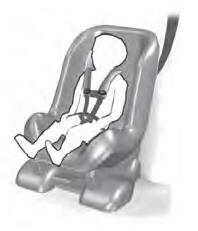
Use a child restraint (sometimes called an infant carrier, convertible seat, or toddler seat) for infants, toddlers and children weighing 40 lb (18 kg) or less (generally four-years-old or younger).
Using Lap and Shoulder Belts
WARNING: Do not place a rearward facing child restraint in front of an active airbag. Failure to follow this instruction could result in personal injury or death.
