Lincoln Aviator: Wheels and Tires / General Information
The recommended tire inflation pressures are found on the Tire Label which is located on the B-pillar or the edge of the driver door. This information can also be found on the Safety Compliance Certification Label, affixed to either the door hinge pillar, door-latch post, or the door edge that meets the door-latch post; next to the driver’s seating position.
We strongly recommend maintaining these tire pressures at all times. Failure to follow the tire pressure recommendations can cause uneven treadwear patterns, reduced fuel economy, and adversely affect the way your vehicle handles.
Note: Check and set the tire pressure at the ambient temperature in which you are intending to drive your vehicle and when the tires are cold.
Note: Check your tire pressures at least once per month.
If your vehicle has a spare tire, set the pressure to the highest value given for your vehicle and tire size combination.
Use only approved wheels and tire sizes, using other sizes could damage your vehicle.
The tires installed on your vehicle from us as original equipment are certified for Greenhouse Gas and Fuel Efficiency regulations. Replacement tires must be of equal or lower rolling resistance level (TRRL or CRR). Consult with your tire supplier for appropriate replacement tires.
If you change the diameter of the factory installed tires, the speedometer may not display the correct speed. This could effect the functionality of the All Wheel Drive (AWD) system, if equipped. Take your vehicle to an authorized dealer and have the engine management system reprogrammed.
If you intend to change the size of the factory installed tires, check the suitability with an authorized dealer.
Additional information related to the functionality and maintenance of your tires can be found in the Wheels and Tire section.
- Notice to utility vehicle and truck owners
- All-wheel drive system (if equipped)
- How your vehicle differs from other vehicles

 Notice to utility vehicle and truck owners
WARNING: Vehicles with a higher
center of gravity (utility and four-wheel
drive vehicles) handle differently than
vehicles with a lower center of gravity
(passenger cars)...
Other information:
Lincoln Aviator 2020-2026 Service Manual: General Procedures - Liftgate Latch Manual Release
Special Tool(s) / General Equipment Flat-Bladed Screwdriver Interior Trim Remover Activation Remove the liftgate latch access cover from the center of the liftgate trim panel. Use the General Equipment: Interior Trim Remover Insert a flat-bladed screwdriver through the access cover opening and depress the cinch release button...
Lincoln Aviator 2020-2026 Owners Manual: Phone
1 Add the number you want to dial to the command. 2 Add a contact name from your phonebook to the command. Say the first and last name of your contact exactly as it appears on your device. 3 Add a contact name and location from your phonebook to the command...
Categories
- Manuals Home
- Lincoln Aviator Owners Manual
- Lincoln Aviator Service Manual
- Wireless Accessory Charger (If Equipped)
- Interior Lamps
- Body and Paint
- New on site
- Most important about car
Fastening the Seatbelts
The front outboard and rear safety restraints in the vehicle are combination lap and shoulder belts.
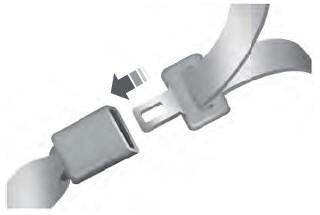
Insert the belt tongue into the proper buckle (the buckle closest to the direction the tongue is coming from) until you hear a snap and feel it latch. Make sure that you securely fasten the tongue in the buckle.