
Lincoln Aviator 2020-2026 Service Manual / Electrical / Electronic Feature Group / Passive Anti-Theft System (PATS) / General Procedures - Key Programming Using Two Programmed Keys
Lincoln Aviator: Passive Anti-Theft System (PATS) / General Procedures - Key Programming Using Two Programmed Keys
Programming
NOTE: This procedure works only if the spare key programming is enabled.
NOTE: Two previously programmed keys are required to perform this procedure. All the steps must be completed within 30 seconds.
NOTE: Make sure all the doors are closed prior to beginning this procedure and they remain closed until the procedure is complete.
-
Locate the passive key backup starting location. Refer
to the Owner Literature for the passive key backup starting location.
-
Place the first programmed passive key in the backup starting location. Press the START/STOP button.
-
Wait 5 seconds and then press the START/STOP button.
-
Remove the first previously programmed passive key.
-
Within 10 seconds, place the second previously
programmed passive key in the backup starting location and press the
START/STOP button.
-
Wait 5 seconds and press the START/STOP button.
-
Remove the second previously programmed passive key.
-
NOTE: See the Owner's Literature for maximum number of keys that can be programmed to the vehicle.
Wait 5 seconds and then place the unprogrammed passive key in the backup starting location and press the START/STOP button.
-
NOTE: If the key does not successfully program, wait at least 10 seconds before attempting to repeat the procedure.
Verify the RKE transmitter operates and the vehicle starts using the new passive key.
 General Procedures - Anti-Theft Key Programming - Scan Tool
Programming
NOTE:
A passive key with a depleted battery(ies) only starts the vehicle when in the backup starting location. The RKE functionality remains inoperative until the key battery(ies) is replaced...
 Removal and Installation - Passive Anti-Theft System (PATS) Center Antenna
Special Tool(s) /
General Equipment
Pick Hook
Interior Trim Remover
Removal
NOTE:
Front seats removed for clarity.
Remove the FCIMB...
Other information:
Lincoln Aviator 2020-2026 Service Manual: Removal and Installation - Rear Climate Control Housing
Removal NOTICE: During the removal or installation of components, cap, tape or otherwise appropriately protect all openings and tubes/fittings to prevent the ingress of dirt or other contamination. Remove caps, tape and other protective materials prior to installation...
Lincoln Aviator 2020-2026 Owners Manual: Garage Door Opener
HomeLink Wireless Control System WARNING: Do not use the system with any garage door opener that does not have the safety stop and reverse feature as required by U.S. Federal Safety Standards (this includes any garage door opener manufactured before April 1, 1982)...
Categories
- Manuals Home
- Lincoln Aviator Owners Manual
- Lincoln Aviator Service Manual
- Opening and Closing the Hood
- Keyless Entry
- Body and Paint
- New on site
- Most important about car
Adjusting the Steering Wheel - Vehicles With: Manual Adjustable Steering Column
WARNING: Do not adjust the steering wheel when your vehicle is moving.
Note: Make sure that you are sitting in the correct position.
Unlock the steering column. Adjust the steering wheel to the desired position.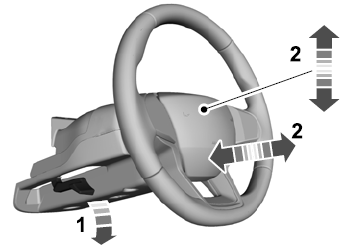

Copyright © 2026 www.liaviator2.com