
Lincoln Aviator 2020-2026 Service Manual / Powertrain / Exhaust System / Exhaust System - 3.0L EcoBoost / Removal and Installation - Exhaust Flexible Pipe
Lincoln Aviator: Exhaust System - 3.0L EcoBoost / Removal and Installation - Exhaust Flexible Pipe
Removal
NOTE: The LH and RH exhaust flexible pipes are covered in this procedure. Remove the exhaust flexible pipe(s) necessary.
NOTE: Removal steps in this procedure may contain installation details.
-
With the vehicle in NEUTRAL, position it on a hoist.
Refer to: Jacking and Lifting (100-02 Jacking and Lifting, Description and Operation).
-
-
Loosen the exhaust clamps.
Torque: 41 lb.ft (55 Nm)
-
Dislodge the resonator inlet pipe from the exhaust hangers.
-
Loosen the exhaust clamps.
.jpg) |
-
Loosen the clamp and remove the RH exhaust flexible pipe.
Torque: 41 lb.ft (55 Nm)
.jpg) |
-
Loosen the clamp and remove the LH exhaust flexible pipe.
Torque: 41 lb.ft (55 Nm)
.jpg) |
Installation
-
To install, reverse the removal procedure.
-
Clean all exhaust connections before reassembly.
-
Check the exhaust system for leaks.
 Removal and Installation - Catalytic Converter RH
Removal
NOTE:
If the catalytic converter is not being replaced, the HO2S
and the catalyst monitor sensor do not need to be removed from the
catalytic converter...
 Removal and Installation - Muffler and Tailpipe
Removal
NOTE:
Muffler and tailpipe assemblies will vary in configuration
with different wheelbases and powertrains. Typical application shown.
NOTE:
Removal steps in this procedure may contain installation details...
Other information:
Lincoln Aviator 2020-2026 Service Manual: Removal and Installation - Front Bumper
Special Tool(s) / General Equipment Interior Trim Remover Removal Remove the front bumper cover. Refer to: Front Bumper Cover (501-19 Bumpers, Removal and Installation). Release the tabs and remove the front bumper energy absorber...
Lincoln Aviator 2020-2026 Service Manual: Diagnosis and Testing - Brake System
Symptom Chart(s) Symptom Chart: Brake System Diagnostics in this manual assume a certain skill level and knowledge of Ford-specific diagnostic practices. REFER to: Diagnostic Methods (100-00 General Information, Description and Operation). Condition Possible Sources Actions The red brake warning indicator and the yellow ABS warning indicator are illuminated Diagnostic Trouble Codes (DTCs) in the ABS CHECK for ABS diagnostic trouble codes (DTCs)...
Categories
- Manuals Home
- Lincoln Aviator Owners Manual
- Lincoln Aviator Service Manual
- Description and Operation - Body and Frame
- Locking and Unlocking
- Resetting the System
- New on site
- Most important about car
Child Seats
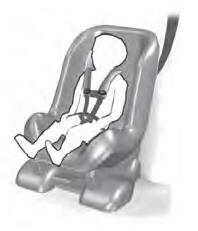
Use a child restraint (sometimes called an infant carrier, convertible seat, or toddler seat) for infants, toddlers and children weighing 40 lb (18 kg) or less (generally four-years-old or younger).
Using Lap and Shoulder Belts
WARNING: Do not place a rearward facing child restraint in front of an active airbag. Failure to follow this instruction could result in personal injury or death.

Copyright © 2026 www.liaviator2.com