Lincoln Aviator: Front End Sheet Metal Repairs / Removal and Installation - Fender Apron Panel Reinforcement
Special Tool(s) / General Equipment
| 6.5 mm Drill Bit | |
| Scraper for Straight Edges | |
| Polydrive Bit Socket | |
| Rivet Gun | |
| Belt Sander | |
| Torx Bit Socket | |
| Hot Air Gun | |
| Locking Pliers |
Materials
| Name | Specification |
|---|---|
| Metal Bonding Adhesive TA-1, TA-1-B, 3M™ 08115, LORD Fusor® 108B |
- |
| Seam Sealer TA-2-B, 3M™ 08308, LORD Fusor® 803DTM |
- |
| Flexible Foam Repair 3M™ 08463, LORD Fusor® 121 |
- |
Removal
.jpg) WARNING:
Electric vehicles damaged by a crash may have compromised
high voltage safety systems and present a potential high voltage
electrical shock hazard. Exercise caution and wear appropriate Personal
Protective Equipment (PPE) safety gear, including high voltage safety
gloves and boots. Remove all metallic jewelry, including watches and
rings. Isolate the HV system as directed by the Ford Emergency Response
Guide for the vehicle. Failure to follow these instructions may result
in serious personal injury or death.
WARNING:
Electric vehicles damaged by a crash may have compromised
high voltage safety systems and present a potential high voltage
electrical shock hazard. Exercise caution and wear appropriate Personal
Protective Equipment (PPE) safety gear, including high voltage safety
gloves and boots. Remove all metallic jewelry, including watches and
rings. Isolate the HV system as directed by the Ford Emergency Response
Guide for the vehicle. Failure to follow these instructions may result
in serious personal injury or death.
NOTICE: The high-voltage battery in a Battery Electric Vehicle (BEV), Hybrid Electric Vehicle (HEV) or Plug-In Hybrid Electric Vehicle (PHEV) can be affected and damaged by excessively high temperatures. The temperature in some body shop paint booths can exceed 60° C (140° F). Therefore, during refinishing operations, the paint booth temperature must set at or below 60° C (140° F) with a bake time of 45 minutes or less. Temperatures in excess of 60° C (140° F) or bake durations longer than 45 minutes will require the high-voltage battery be removed from the vehicle prior to placing in the paint booth.
NOTICE: Electric Vehicle (EV), Hybrid Electric Vehicle (HEV) and Plug-In Hybrid Electric Vehicle (PHEV) vehicles contain a High Voltage Battery (HVB). Before welding near the HVB, the HVB must be removed to avoid heat damage.
NOTE: Left hand (LH) side shown, right hand (RH) side similar.
-
Refer to: Health and Safety Precautions (100-00 General Information, Description and Operation).
WARNING:
Before beginning any service procedure in this
manual, refer to health and safety warnings in section 100-00 General
Information. Failure to follow this instruction may result in serious
personal injury.
Refer to: High Voltage System Health and Safety Precautions - Overview (100-00 General Information, Description and Operation).
-
Remove the fender apron panel.
Refer to: Fender Apron Panel (501-27 Front End Sheet Metal Repairs, Removal and Installation).
-
If required, dimensionally restore vehicle to pre-accident condition.
Refer to: Body and Frame (501-26 Body Repairs - Vehicle Specific Information and Tolerance Checks, Description and Operation).
-
Remove the tire and wheel.
Refer to: Wheel and Tire (204-04A Wheels and Tires, Removal and Installation).
-
Remove the shock absorber and spring assembly.
Refer to: Shock Absorber and Spring Assembly (204-01A Front Suspension - RWD, Removal and Installation).
Refer to: Shock Absorber and Spring Assembly (204-01B Front Suspension - AWD, Removal and Installation).
-
Remove the bolts and the suspension brace.
.jpg) |
-
Remove the fasteners and the brace.
.jpg) |
-
Remove the sealer.
Use the General Equipment: Scraper for Straight Edges
Use the General Equipment: Hot Air Gun
.jpg) |
-
Remove the sealer.
Use the General Equipment: Scraper for Straight Edges
Use the General Equipment: Hot Air Gun
.jpg) |
-
Remove and discard the fasteners.
Use the General Equipment: Polydrive Bit Socket
.jpg) |
-
Remove the rivets.
Use the General Equipment: Belt Sander
.jpg) |
-
Remove the rivets.
.jpg) |
-
Remove the bolt.
Use the General Equipment: Torx Bit Socket
.jpg) |
-
Remove the fender apron panel reinforcement.
Use the General Equipment: Hot Air Gun
.jpg) |
Installation
WARNING:
Electric vehicles damaged by a crash may have compromised
high voltage safety systems and present a potential high voltage
electrical shock hazard. Exercise caution and wear appropriate Personal
Protective Equipment (PPE) safety gear, including high voltage safety
gloves and boots. Remove all metallic jewelry, including watches and
rings. Isolate the HV system as directed by the Ford Emergency Response
Guide for the vehicle. Failure to follow these instructions may result
in serious personal injury or death.
NOTICE: The high-voltage battery in a Battery Electric Vehicle (BEV), Hybrid Electric Vehicle (HEV) or Plug-In Hybrid Electric Vehicle (PHEV) can be affected and damaged by excessively high temperatures. The temperature in some body shop paint booths can exceed 60° C (140° F). Therefore, during refinishing operations, the paint booth temperature must set at or below 60° C (140° F) with a bake time of 45 minutes or less. Temperatures in excess of 60° C (140° F) or bake durations longer than 45 minutes will require the high-voltage battery be removed from the vehicle prior to placing in the paint booth.
NOTICE: Electric Vehicle (EV), Hybrid Electric Vehicle (HEV) and Plug-In Hybrid Electric Vehicle (PHEV) vehicles contain a High Voltage Battery (HVB). Before welding near the HVB, the HVB must be removed to avoid heat damage.
NOTICE: If refinishing cure temperatures exceed 60°C (140°F), the charge port light ring must be removed.
NOTE: Left hand (LH) side shown, right hand (RH) side similar.
-
Refer to: Health and Safety Precautions (100-00 General Information, Description and Operation).
WARNING:
Before beginning any service procedure in this
manual, refer to health and safety warnings in section 100-00 General
Information. Failure to follow this instruction may result in serious
personal injury.
Refer to: High Voltage System Health and Safety Precautions - Overview (100-00 General Information, Description and Operation).
-
Apply adhesive.
Material: Metal Bonding Adhesive / TA-1, TA-1-B, 3M™ 08115, LORD Fusor® 108B
.jpg) |
-
Install, properly position and clamp the fender apron panel reinforcement.
Use the General Equipment: Locking Pliers
.jpg) |
-
Install the bolt.
Torque: 35 lb.ft (47 Nm)
|
-
Drill for blind rivet installation.
Use the General Equipment: 6.5 mm Drill Bit
.jpg) |
-
Install the rivets.
Use the General Equipment: Rivet GunItem SPR Number SPR Code Henrob® , Car-OLiner®, CMO®, Spanesi®, Wielander and Schill® Mandrel Pro Spot® Mandrel Blind Rivet Solid Rivet Rivnut® 1 – – – – W702512-S900C – – 2 – – – – W708777-S900C – –
.jpg) |
-
Install the rivets.
Use the General Equipment: Rivet GunItem SPR Number SPR Code Henrob® , Car-OLiner®, CMO®, Spanesi®, Wielander and Schill® Mandrel Pro Spot® Mandrel Blind Rivet Solid Rivet Rivnut® 1 – – – – W707638-S900C – –
.jpg) |
-
Seam Sealing:
All seams must be sealed to production level.
Material: Seam Sealer / TA-2-B, 3M™ 08308, LORD Fusor® 803DTM
.jpg) |
-
Seam Sealing:
All seams must be sealed to production level.
Material: Seam Sealer / TA-2-B, 3M™ 08308, LORD Fusor® 803DTM
.jpg) |
-
Apply NVH foam sealant in areas noted during removal.
Material: Flexible Foam Repair / 3M™ 08463, LORD Fusor® 121
.jpg) |
-
Install the suspension brace and fasteners.
Torque: 22 lb.ft (30 Nm)
|
-
Install the brace and fasteners.
Torque: 22 lb.ft (30 Nm)
|
-
Install the fender apron panel.
Refer to: Fender Apron Panel (501-27 Front End Sheet Metal Repairs, Removal and Installation).
-
Refinish the entire repair area using a Ford approved paint system.
-
Restore corrosion protection.
Refer to: Corrosion Prevention (501-25 Body Repairs - General Information, General Procedures).
-
Install the shock absorber and spring assembly.
Refer to: Shock Absorber and Spring Assembly (204-01A Front Suspension - RWD, Removal and Installation).
Refer to: Shock Absorber and Spring Assembly (204-01B Front Suspension - AWD, Removal and Installation).
-
Install the tire and wheel.
Refer to: Wheel and Tire (204-04A Wheels and Tires, Removal and Installation).
 Removal and Installation - Fender Apron Panel
Special Tool(s) /
General Equipment
6.5 mm Drill Bit
Resistance Spotwelding Equipment
Rivet Gun
Self-Piercing Rivet (SPR) Remover/Installer
Belt Sander
Torx Bit Socket
Hot Air Gun
MIG/MAG Welding Equipment
Spot Weld Drill Bit
Locking Pliers
Materials
Name
Specification
Metal Bonding AdhesiveTA-1, TA-1-B, 3M™ 08115, LORD Fusor® 108B
-
Seam SealerTA-2-B, 3M™ 08308, LORD Fusor® 803DTM
-
Removal
WARNING:
Electric vehicles damaged by a crash may have compromised
high voltage safety systems and present a potential high voltage
electrical shock hazard...
 Removal and Installation - Front Side Member
Special Tool(s) /
General Equipment
6.5 mm Drill Bit
Scraper for Straight Edges
Self-Piercing Rivet (SPR) Remover/Installer
Belt Sander
Blind Rivet Gun
Torx Bit Socket
Hot Air Gun
Locking Pliers
Materials
Name
Specification
Metal Bonding AdhesiveTA-1, TA-1-B, 3M™ 08115, LORD Fusor® 108B
-
Seam SealerTA-2-B, 3M™ 08308, LORD Fusor® 803DTM
-
Flexible Foam Repair3M™ 08463, LORD Fusor® 121
-
Removal
WARNING:
Electric vehicles damaged by a crash may have compromised
high voltage safety systems and present a potential high voltage
electrical shock hazard...
Other information:
Lincoln Aviator 2020-2026 Owners Manual: Hazard Flashers
Note: The hazard flashers operate when the ignition is in any position, or if the key is not in the ignition. If used when the vehicle is not running, the battery loses charge. As a result, there may be insufficient power to restart your vehicle...
Lincoln Aviator 2020-2026 Owners Manual: SelectShift Automatic™ Transmission
Your vehicle has a SelectShift Automatic transmission. The SelectShift Automatic transmission gives you the ability to change gears up or down, without a clutch, as preferred. To prevent the engine from running at too low an RPM, which could cause it to stall, SelectShift still makes some downshifts if it determines that you have not downshifted in time...
Categories
- Manuals Home
- Lincoln Aviator Owners Manual
- Lincoln Aviator Service Manual
- Wireless Accessory Charger (If Equipped)
- Garage Door Opener
- Anti-Theft Alarm
- New on site
- Most important about car
Activating Intelligent Access
The intelligent access key must be within 3 ft (1 m) of the door or luggage compartment you intend to lock or unlock.
At a Door
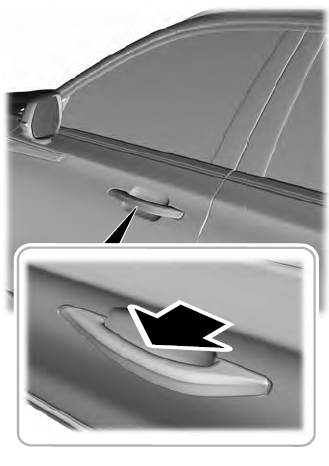
Electronic door handles are on each door. Gently depress the switch inside the exterior door handle to unlock and open the door. An unlock symbol illuminates on the door window trim indicating your vehicle is unlocked.