
Lincoln Aviator 2020-2026 Service Manual / Powertrain / Fuel System - General Information / Acceleration Control
Lincoln Aviator: Fuel System - General Information / Acceleration Control
- Description and Operation - Acceleration Control - Overview
- Description and Operation - Acceleration Control - System Operation and Component Description
- Diagnosis and Testing - Acceleration Control
- Removal and Installation - Accelerator Pedal
 Removal and Installation - Fuel Tank
Special Tool(s) /
General Equipment
Transmission Jack
Removal
NOTE:
Removal steps in this procedure may contain installation steps.
Release the fuel system pressure...
 Description and Operation - Acceleration Control - Overview
The acceleration controls consist of the accelerator pedal, APP sensor and bracket assembly.
The throttle is controlled by an APP sensor on the accelerator pedal assembly...
Other information:
Lincoln Aviator 2020-2026 Service Manual: Removal and Installation - Transfer Case Input Shaft Seal
Special Tool(s) / General Equipment 205-1018Installation Tube 308-943Installer, Input Seal Removal With the vehicle in NEUTRAL, position it on a hoist. Refer to: Jacking and Lifting (100-02 Jacking and Lifting, Description and Operation)...
Lincoln Aviator 2020-2026 Owners Manual: Text Messaging
Setting Text Message Notification iOS Go to the settings menu on your cell phone. Select Bluetooth. Select the information icon to the right of your vehicle. Switch text message notification on. Android Go to the settings menu on your cell phone...
Categories
- Manuals Home
- Lincoln Aviator Owners Manual
- Lincoln Aviator Service Manual
- Opening and Closing the Hood
- Child Safety Locks
- Fuel Quality
- New on site
- Most important about car
Child Seats
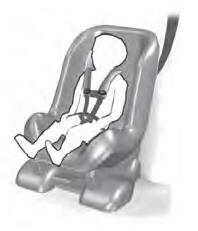
Use a child restraint (sometimes called an infant carrier, convertible seat, or toddler seat) for infants, toddlers and children weighing 40 lb (18 kg) or less (generally four-years-old or younger).
Using Lap and Shoulder Belts
WARNING: Do not place a rearward facing child restraint in front of an active airbag. Failure to follow this instruction could result in personal injury or death.

Copyright © 2026 www.liaviator2.com