Lincoln Aviator: Adaptive Cruise Control / Adaptive Cruise Control Limitations - Vehicles With: Adaptive Cruise Control With Lane Centering
Adaptive cruise control limitations apply to lane centering unless stated otherwise or contradicted by a lane centering limitation.
The system may not correctly operate in any of the following conditions:
- Your vehicle is not centered in the lane.
- The lane is too narrow or wide.
- The system does not detect at least one lane marking or when lanes merge or split.
- You switch the direction indicator on.
- Limited steering torque input is applied.
- Areas under construction or new infrastructure.
- When modifications to the steering system have been made.
- When using a spare tire.
Note: The driving assistance torque is limited and may not be sufficient for all driving situations such as driving through tight curves or driving through curves at high speeds.
Note: In exceptional conditions, the system may deviate from the center line.
 Adaptive Cruise Control Precautions - Vehicles With: Adaptive Cruise Control
With Stop and Go
WARNING: You are responsible for
controlling your vehicle at all times. The
system is designed to be an aid and does
not relieve you of your responsibility to
drive with due care and attention...
 Adaptive Cruise Control Limitations - Vehicles With: Adaptive Cruise Control
With Stop and Go
Sensor Limitations
WARNING: On rare occasions,
detection issues can occur due to the road
infrastructures, for example bridges,
tunnels and safety barriers...
Other information:
Lincoln Aviator 2020-2026 Service Manual: Diagnosis and Testing - Direct Current/Direct Current (DC/DC) Converter Control Module
Diagnostic Trouble Code (DTC) Chart Diagnostics in this manual assume a certain skill level and knowledge of Ford-specific diagnostic practices. REFER to: Diagnostic Methods (100-00 General Information, Description and Operation). Diagnostic Trouble Code Chart Module DTC Description Action DCDC P0A94:4B DC/DC Converter "A" Performance: Over Temperature GO to Pinpoint Test C DCDC P0D32:00 DC/DC Converter Over Temperature: No Sub Type Information GO to Pinpoint Test C DCDC P0E56:00 DC/DC Converter Input Voltage Too Low: No Sub Type Information GO to Pinpoint Test D DCDC P0E56:13 DC/DC Converter Input Voltage Too Low: Circuit Open GO to Pinpoint Test D DCDC P0E57:00 DC/DC Converter Input Voltage Too High: No Sub Type Information GO to Pinpoint Test E DCDC U0100:00 Lost Communication With ECM/PCM "A": No Sub Type Information GO to Pinpoint Test I DCDC U0111:00 Lost Communication With Battery Energy Control Module "A": No Sub Type Information GO to Pinpoint Test J DCDC U0412:00 Invalid Data Received From Battery Energy Control Module "A": No Sub Type Information GO to Pinpoint Test K DCDC U3000:04 Control Module: System Internal Failures GO to Pinpoint Test L DCDC U3000:41 Control Module: General Checksum Failure GO to Pinpoint Test M DCDC U3000:42 Control Module: General Memory Failure GO to Pinpoint Test M DCDC U3000:45 Control Module: Program Memory Failure GO to Pinpoint Test M DCDC U3000:49 Control Module: Internal Electronic Failure GO to Pinpoint Test M DCDC U3000:96 Control Module: Component Internal Failure GO to Pinpoint Test N DCDC U3003:16 Battery Voltage: Circuit Voltage Below Threshold GO to Pinpoint Test F DCDC U3003:17 Battery Voltage: Circuit Voltage Above Threshold GO to Pinpoint Test G DCDC U3003:62 Battery Voltage: Signal Compare Failure GO to Pinpoint Test H Global Customer Symptom Code (GCSC) Chart Diagnostics in this manual assume a certain skill level and knowledge of Ford-specific diagnostic practices...
Lincoln Aviator 2020-2026 Owners Manual: Autolock (If Equipped)
Autolock locks all the doors when: All doors are closed. The ignition is on. You shift into any gear putting your vehicle in motion. Your vehicle reaches a speed greater than 12 mph (20 km/h). Autolock repeats when: You open then close any door while the ignition is on and your vehicle speed is 9 mph (15 km/h) or lower...
Categories
- Manuals Home
- Lincoln Aviator Owners Manual
- Lincoln Aviator Service Manual
- Child Safety Locks
- Keyless Entry
- USB Port and Power Point Locations
- New on site
- Most important about car
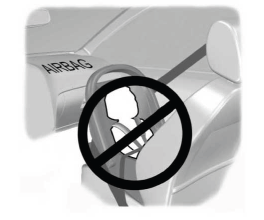
Children and Airbags
WARNING: Airbags can kill or injure a child in a child restraint. Never place a rear-facing child restraint in front of an active airbag. If you must use a forward-facing child restraint in the front seat, move the seat upon which the child restraint is installed all the way back.