
Lincoln Aviator 2020-2026 Owners Manual / Interior Air Quality / Auto Air Refresh Indicators (If Equipped)
Lincoln Aviator: Interior Air Quality / Auto Air Refresh Indicators (If Equipped)
The indicator area is on the touchscreen feature bar and displays one of the following:
 Indicates blower motor is on for
filtering and PM2.5 is low.
Indicates blower motor is on for
filtering and PM2.5 is low.
 Indicates the blower motor is on
for filtering.
Indicates the blower motor is on
for filtering.
 Indicates the blower motor is
off.
Indicates the blower motor is
off.
 Indicates the status is not
available.
Indicates the status is not
available.
 Checking the Interior Air Quality (If Equipped)
Press the button on touchscreen
feature bar to see current cabin
PM2.5 information.
Note: You can also press the menu button
on the climate control unit and then press
PM2...
 Refreshing the Interior Air
Manually Refreshing the Interior Air (If Equipped)
Press MENU on the climate control unit.
Press Cabin Refresh on the touchscreen.
Note: Climate control settings could change
for about 90 seconds to help flow outside
air into the cabin...
Other information:
Lincoln Aviator 2020-2026 Service Manual: Disassembly and Assembly - Shock Absorber and Spring Assembly - Vehicles With: Air Suspension
Special Tool(s) / General Equipment Flat Headed Screw Driver DISASSEMBLY WARNING: Vent all air pressure from the air suspension system prior to disconnecting or removing any air suspension components. It is dangerous to remove air suspension components while under pressure...
Lincoln Aviator 2020-2026 Service Manual: Removal and Installation - Front Impact Severity Sensor
Removal WARNING: The following procedure prescribes critical repair steps required for correct restraint system operation during a crash. Follow all notes and steps carefully. Failure to follow step instructions may result in incorrect operation of the restraint system and increases the risk of serious personal injury or death in a crash...
Categories
- Manuals Home
- Lincoln Aviator Owners Manual
- Lincoln Aviator Service Manual
- Disabling Auto-Start-Stop
- Body and Paint
- Description and Operation - Jacking and Lifting
- New on site
- Most important about car
Child Seats
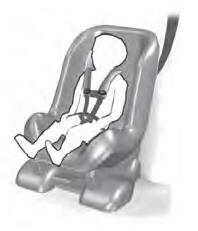
Use a child restraint (sometimes called an infant carrier, convertible seat, or toddler seat) for infants, toddlers and children weighing 40 lb (18 kg) or less (generally four-years-old or younger).
Using Lap and Shoulder Belts
WARNING: Do not place a rearward facing child restraint in front of an active airbag. Failure to follow this instruction could result in personal injury or death.

Copyright © 2026 www.liaviator2.com