Lincoln Aviator: Locking and Unlocking / Closing the Luggage Compartment

From Inside Your Vehicle

Lincoln Aviator. Closing the Luggage Compartment Press the button on the instrument panel to close the luggage compartment.

With the Remote Control

Lincoln Aviator. Closing the Luggage Compartment Press twice within three seconds to close the luggage compartment.

From Outside Your Vehicle
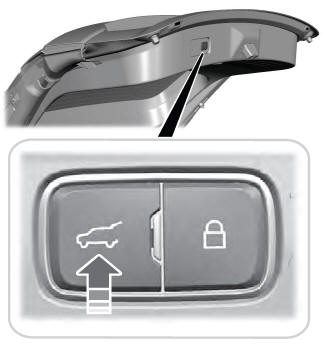
Lincoln Aviator. Closing the Luggage Compartment

Press the button inside the liftgate on the left-hand side.

    Opening the Luggage Compartment

    From Inside Your Vehicle With the transmission in park (P), press the button on the instrument panel. With the Remote Control Press twice within three seconds to open the luggage compartment...

    Opening the Doors

    Front Doors Press the door release button on the armrest to release the door. Push the door out to open the door. Rear Doors Press the unlock switch on the door and then press the door release button on the armrest to release the door...

    Other information:

    Lincoln Aviator 2020-2026 Service Manual: Diagnosis and Testing - Body Control Module (BCM)


    Diagnostic Trouble Code (DTC) Chart Diagnostics in this manual assume a certain skill level and knowledge of Ford-specific diagnostic practices. REFER to: Diagnostic Methods (100-00 General Information, Description and Operation).   Diagnostic Trouble Code Chart Module   DTC Description Action   BCM B11D9:16 Vehicle Battery:Circuit Voltage Below Threshold   GO to Pinpoint Test Y   BCM B11D9:17 Vehicle Battery:Circuit Voltage Above Threshold   GO to Pinpoint Test Z   BCM U0100:87 Lost Communication With ECM/PCM "A":Missing Message   GO to Pinpoint Test A   BCM U0121:87 Lost Communication With Anti-Lock Brake System (ABS) Control Module:Missing Message   GO to Pinpoint Test B   BCM U0131:87 Lost Communication With Power Steering Control Module:Missing Message   GO to Pinpoint Test C   BCM U0151:87 Lost Communication With Restraints Control Module:Missing Message   GO to Pinpoint Test D   BCM U0155:87 Lost Communication With Instrument Panel Cluster (IPC) Control Module:Missing Message   GO to Pinpoint Test E   BCM U0166:87 Lost Communication With Auxiliary Heater Control Module:Missing Message   GO to Pinpoint Test F   BCM U0184:87 Lost Communication With Radio:Missing Message   GO to Pinpoint Test G   BCM U0198:87 Lost Communication With Telematic Control Module: Missing Message   GO to Pinpoint Test H   BCM U0199:87 Lost Communication With "Door Control Module A":Missing Message   GO to Pinpoint Test I   BCM U019B:87 Lost Communication With Battery Charger Control Module:Missing Message   GO to Pinpoint Test J   BCM U0200:87 Lost Communication With "Door Control Module B":Missing Message   GO to Pinpoint Test K   BCM U0208:87 Lost Communication With "Seat Control Module A":Missing Message   GO to Pinpoint Test L   BCM U0212:87 Lost Communication With Steering Column Control Module:Missing Message   GO to Pinpoint Test M   BCM U0230:87 Lost Communication With Rear Gate Module:Missing Message   GO to Pinpoint Test N   BCM U0232:87 Lost Communication With Side Obstacle Detection Control Module "A":Missing Message   GO to Pinpoint Test O   BCM U0233:87 Lost Communication With Side Obstacle Detection Control Module "B":Missing Message   GO to Pinpoint Test P   BCM U023A:87 Lost Communication With Image Processing Control Module A:Missing Message   GO to Pinpoint Test Q   BCM U0252:87 Lost Communication With Lighting Control Module-Rear "B":Missing Message   GO to Pinpoint Test R   BCM U0253:87 Lost Communication With Accessory Protocol Interface Module:Missing Message   GO to Pinpoint Test S   BCM U0256:87 Lost Communication With Front Controls Interface Module "A":Missing Message   GO to Pinpoint Test T   BCM U0293:87 Lost Communication With Hybrid/EV Powertrain Control Module "A":Missing Message   GO to Pinpoint Test U   BCM U1000:00 Solid State Driver Protection Active:Driver Disabled: No Sub Type Information   GO to Pinpoint Test V   BCM U2005:85 Vehicle Speed:Signal Above Allowable Range   GO to Pinpoint Test W   BCM U2100:00 Initial Configuration Not Complete:No Sub Type Information   GO to Pinpoint Test X   BCM U2101:00 Control Module Configuration Inomplete:No Sub Type Information   GO to Pinpoint Test X   BCM U2200:00 Control Module Configuration Memory Corrupt:No Sub Type Information   GO to Pinpoint Test X   BCM U3000:49 Control Module:Internal Electronic Failure   GO to Pinpoint Test AA   BCM U3006:16 Control Module Input Power “A”:Circuit Voltage Below Threshold   GO to Pinpoint Test Y   BCM U3006:17 Control Module Input Power “A”:Circuit Voltage Above Threshold   GO to Pinpoint Test Z   BCM U3006:1C Control Module Input Power “A”:Circuit Voltage Out of Range   GO to Pinpoint Test Y   BCM U3006:1C Control Module Input Power “A”:Circuit Voltage Out of Range   GO to Pinpoint Test Z   BCM U3007:16 Control Module Input Power "B":Circuit Voltage Below Threshold   GO to Pinpoint Test Y   BCM U3007:17 Control Module Input Power "B":Circuit Voltage Above Threshold   GO to Pinpoint Test Z   BCM U3013:16 Control Module Input Power "C":Circuit Voltage Below Threshold   GO to Pinpoint Test Y   BCM U3013:17 Control Module Input Power "C":Circuit Voltage Above Threshold   GO to Pinpoint Test Z   BCM U3014:16 Control Module Input Power "D":Circuit Voltage Below Threshold   GO to Pinpoint Test Y   BCM U3014:17 Control Module Input Power "D":Circuit Voltage Above Threshold   GO to Pinpoint Test Z Symptom Chart Symptom Chart: Multifunction Electronic Modules Diagnostics in this manual assume a certain skill level and knowledge of Ford-specific diagnostic practices...

    Lincoln Aviator 2020-2026 Service Manual: General Procedures - Wheel to Tire Runout Minimization


    Check NOTE: Road Force® values in illustrations are shown in pounds. NOTE: Match mounting is a technique used to reduce radial runout or road force on wheel and tire assemblies. Excessive runout is a source of ride quality complaints and match mounting can be used to minimize the runout...

    Categories

    Child Seats

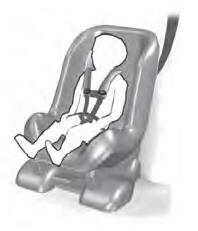
    Lincoln Aviator. Child Seats

    Use a child restraint (sometimes called an infant carrier, convertible seat, or toddler seat) for infants, toddlers and children weighing 40 lb (18 kg) or less (generally four-years-old or younger).

    Using Lap and Shoulder Belts

    WARNING: Do not place a rearward facing child restraint in front of an active airbag. Failure to follow this instruction could result in personal injury or death.

    read more

     
    Copyright © 2026 www.liaviator2.com