
Lincoln Aviator: Capacities and Specifications - Excluding: Plug-In Hybrid Electric Vehicle (PHEV) / Front Axle
Capacities

Materials

 Transfer Case
C..
 Rear Axle
C..
Other information:
Lincoln Aviator 2020-2026 Service Manual: Description and Operation - Vehicle Dynamic Suspension - Vehicles With: Air Suspension - System Operation and Component Description
System Operation System Diagram Item Description 1 HS-CAN2 2 HS-CAN1 3 HS-CAN3 4 SUMA and Air Compressor Assembly 5 LHF Air Spring Solenoid 6 PSCM 7 PCM 8 ABS 9 LHF Height Sensor 10 RHF Height Sensor 11 LHR Height Sensor 12 RHR Height Sensor 13 BCM 14 RHF Air Spring Solenoid 15 LHR Air Spring Solenoid 16 RHR Air Spring Solenoid 17 IPC 18 RCM 19 GWM Network Message Chart Module Network Input Messages - SUMA Broadcast Message Originating Module Message Purpose ABS active ABS module Indicates the current ABS activity, on or off...
Lincoln Aviator 2020-2026 Owners Manual: Safety Practices
WARNING: If your vehicle is stuck in snow, mud or sand, do not rapidly spin the tires; spinning the tires can tear the tire and cause an explosion. A tire can explode in as little as three to five seconds. WARNING: Do not spin the wheels at over 34 mph (55 km/h)...
Categories
- Manuals Home
- Lincoln Aviator Owners Manual
- Lincoln Aviator Service Manual
- Opening and Closing the Hood
- Locking and Unlocking
- Configuring The Head Up Display
- New on site
- Most important about car
Child Seats
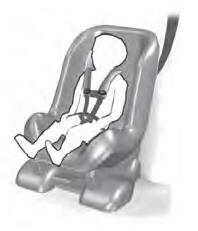
Use a child restraint (sometimes called an infant carrier, convertible seat, or toddler seat) for infants, toddlers and children weighing 40 lb (18 kg) or less (generally four-years-old or younger).
Using Lap and Shoulder Belts
WARNING: Do not place a rearward facing child restraint in front of an active airbag. Failure to follow this instruction could result in personal injury or death.

Copyright © 2026 www.liaviator2.com