
Lincoln Aviator 2020-2026 Service Manual / Powertrain / Engine / Engine - 3.0L EcoBoost / Removal and Installation - Cylinder Head LH
Lincoln Aviator: Engine - 3.0L EcoBoost / Removal and Installation - Cylinder Head LH
Removal
NOTICE: During engine repair procedures, cleanliness is extremely important. Any foreign material, including any material created while cleaning gasket surfaces, that enters the oil passages, coolant passages or the oil pan, can cause engine failure.
-
With the vehicle in NEUTRAL, position it on a hoist.
Refer to: Jacking and Lifting (100-02 Jacking and Lifting, Description and Operation).
-
Release the fuel system pressure.
Refer to: Fuel System Pressure Release (310-00A Fuel System - General Information - 3.0L EcoBoost, General Procedures).
-
Disconnect the battery ground cable.
Refer to: Battery Disconnect and Connect (414-01 Battery, Mounting and Cables, General Procedures).
-
Drain the cooling system.
Refer to: Engine Cooling System Draining, Vacuum Filling and Bleeding (303-03A Engine Cooling - 3.0L EcoBoost, General Procedures).
-
Remove the following items:
-
Refer to: Camshaft LH (303-01A Engine - 3.0L EcoBoost, Removal and Installation).
-
LH side.
Refer to: Cylinder Head to Coolant Outlet Connector Hose Assembly (303-03A Engine Cooling - 3.0L EcoBoost, Removal and Installation).
-
Refer to: Camshaft LH (303-01A Engine - 3.0L EcoBoost, Removal and Installation).
-
-
Loosen the fuel rail-to-fuel rail high-pressure fuel tube flare nuts.
-
Remove and discard the high-pressure fuel tube.
-
Loosen the fuel rail-to-fuel rail high-pressure fuel tube flare nuts.
.jpg) |
-
-
Remove and discard the cylinder head bolts.
-
Remove the cylinder head.
-
Remove and discard the cylinder head bolts.
.jpg) |
-
Remove and discard the cylinder head gasket.
.jpg) |
-
-
Clean and inspect the cylinder head-to-cylinder
block mating surfaces of both the cylinder head and the cylinder block.
-
Refer to: Cylinder Head Distortion (303-00 Engine System - General Information, General Procedures).
-
Refer to: Cylinder Block Distortion (303-00 Engine System - General Information, General Procedures).
-
Clean and inspect the cylinder head-to-cylinder
block mating surfaces of both the cylinder head and the cylinder block.
.jpg) |
Installation
-
Install a new cylinder head gasket.
.jpg) |
-
-
Install the cylinder head.
-
Install new cylinder head bolts.
Torque:
Stage 1: 177 lb.in (20 Nm)
Stage 2: Loosen: 2 turn(s)
Stage 3: 37 lb.ft (50 Nm)
Stage 4: 180°
-
Install the cylinder head.
.jpg) |
-
NOTE: Make sure that a new component is installed.
Install a new fuel rail-to-fuel rail high-pressure fuel tube and finger tighten the flare nuts.
-
Final tighten the flare nuts.
Torque:
Stage 1: 62 lb.in (7 Nm)
Stage 2: 89 lb.in (10 Nm)
Stage 3: 25°
-
Final tighten the flare nuts.
.jpg) |
-
Install the following items:
-
LH side.
Refer to: Cylinder Head to Coolant Outlet Connector Hose Assembly (303-03A Engine Cooling - 3.0L EcoBoost, Removal and Installation).
-
Refer to: Camshaft LH (303-01A Engine - 3.0L EcoBoost, Removal and Installation).
-
LH side.
-
Connect the battery ground cable.
Refer to: Battery Disconnect and Connect (414-01 Battery, Mounting and Cables, General Procedures).
-
Pressurize the fuel system.
Refer to: Fuel System Pressure Release (310-00A Fuel System - General Information - 3.0L EcoBoost, General Procedures).
-
Fill and bleed the cooling system.
Refer to: Engine Cooling System Draining, Vacuum Filling and Bleeding (303-03A Engine Cooling - 3.0L EcoBoost, General Procedures).
-
Use the Powertrain Control Module (PCM) Misfire Monitor Profile Correction routine in the diagnostic scan tool.
 Removal and Installation - Crankshaft Rear Seal with Retainer Plate
Special Tool(s) /
General Equipment
303-1250Seal Installer, Rear MainTKIT-2006UFFLM
Plastic Scraper
Materials
Name
Specification
Motorcraft® High Performance Engine RTV SiliconeTA-357
WSE-M4G323-A6
Motorcraft® Silicone Gasket RemoverZC-30-A
-
Motorcraft® Metal Surface Prep WipesZC-31-B
-
Motorcraft® Metal Brake Parts CleanerPM-4-A, PM-4-B
-
Removal
Remove the flexplate...

Other information:
Lincoln Aviator 2020-2026 Service Manual: Removal and Installation - Occupant Classification System (OCS) Sensor - Vehicles Without: Multi-Contour Seats
Special Tool(s) / General Equipment Flat Headed Screw Driver Removal WARNING: The following procedure prescribes critical repair steps required for correct restraint system operation during a crash. Follow all notes and steps carefully...
Lincoln Aviator 2020-2026 Service Manual: Diagnosis and Testing - Air/Fuel Ratio
Diagnostic Trouble Code (DTC) Chart Diagnostics in this manual assume a certain skill level and knowledge of Ford-specific diagnostic practices.REFER to: Diagnostic Methods (100-00 General Information, Description and Operation). Diagnostic Trouble Code Chart Module DTC Description Action PCM P0030:00 HO2S Heater Control Circuit (Bank 1 Sensor 1): No Sub Type Information GO to Pinpoint Test DW PCM P0030:00 HO2S Heater Control Circuit (Bank 1 Sensor 1): No Sub Type Information GO to Pinpoint Test DZ PCM P0036:00 HO2S Heater Control Circuit (Bank 1 Sensor 2): No Sub Type Information GO to Pinpoint Test DW PCM P0037:00 HO2S Heater Control Circuit Low (Bank 1 Sensor 2): No Sub Type Information GO to Pinpoint Test DW PCM P0038:00 HO2S Heater Control Circuit High (Bank 1 Sensor 2): No Sub Type Information GO to Pinpoint Test DW PCM P0040:00 Oxygen Sensor Signals Swapped Bank 1 Sensor 1/Bank 2 Sensor 1: No Sub Type Information GO to Pinpoint Test DZ PCM P0041:00 Oxygen Sensor Signals Swapped Bank 1 Sensor 2/Bank 2 Sensor 2: No Sub Type Information GO to Pinpoint Test DW PCM P0050:00 HO2S Heater Control Circuit (Bank 2 Sensor 1): No Sub Type Information GO to Pinpoint Test DZ PCM P0053:00 HO2S Heater Resistance (Bank 1 Sensor 1): No Sub Type Information GO to Pinpoint Test DW PCM P0053:00 HO2S Heater Resistance (Bank 1 Sensor 1): No Sub Type Information GO to Pinpoint Test DZ PCM P0054:00 HO2S Heater Resistance (Bank 1 Sensor 2): No Sub Type Information GO to Pinpoint Test DW PCM P0056:00 HO2S Heater Control Circuit (Bank 2 Sensor 2): No Sub Type Information GO to Pinpoint Test DW PCM P0059:00 HO2S Heater Resistance (Bank 2 Sensor 1): No Sub Type Information GO to Pinpoint Test DZ PCM P0060:00 HO2S Heater Resistance (Bank 2 Sensor 2): No Sub Type Information GO to Pinpoint Test DW PCM P00D2:00 HO2S Heater Control Circuit Range/Performance (Bank 1 Sensor 2): No Sub Type Information GO to Pinpoint Test DW PCM P0130:00 O2 Sensor Circuit (Bank 1 Sensor 1): No Sub Type Information GO to Pinpoint Test DW PCM P0130:00 O2 Sensor Circuit (Bank 1 Sensor 1): No Sub Type Information GO to Pinpoint Test DZ PCM P0131:00 O2 Sensor Circuit Low Voltage (Bank 1 Sensor 1): No Sub Type Information GO to Pinpoint Test DW PCM P0131:00 O2 Sensor Circuit Low Voltage (Bank 1 Sensor 1): No Sub Type Information GO to Pinpoint Test DZ PCM P0132:00 O2 Sensor Circuit High Voltage (Bank 1 Sensor 1): No Sub Type Information GO to Pinpoint Test DW PCM P0132:00 O2 Sensor Circuit High Voltage (Bank 1 Sensor 1): No Sub Type Information GO to Pinpoint Test DZ PCM P0133:00 O2 Sensor Circuit Slow Response (Bank 1 Sensor 1): No Sub Type Information GO to Pinpoint Test DW PCM P0133:00 O2 Sensor Circuit Slow Response (Bank 1 Sensor 1): No Sub Type Information GO to Pinpoint Test DZ PCM P0134:00 O2 Sensor Circuit No Activity Detected (Bank 1 Sensor 1): No Sub Type Information GO to Pinpoint Test DW PCM P0134:00 O2 Sensor Circuit No Activity Detected (Bank 1 Sensor 1): No Sub Type Information GO to Pinpoint Test DZ PCM P0135:00 O2 Sensor Heater Circuit (Bank 1 Sensor 1): No Sub Type Information GO to Pinpoint Test DW PCM P0135:00 O2 Sensor Heater Circuit (Bank 1 Sensor 1): No Sub Type Information GO to Pinpoint Test DZ PCM P0136:00 O2 Sensor Circuit (Bank 1 Sensor 2): No Sub Type Information GO to Pinpoint Test DW PCM P0137:00 O2 Sensor Circuit Low Voltage (Bank 1 Sensor 2): No Sub Type Information GO to Pinpoint Test DW PCM P0138:00 O2 Sensor Circuit High Voltage (Bank 1 Sensor 2): No Sub Type Information GO to Pinpoint Test DW PCM P0139:00 O2 Sensor Circuit Slow Response (Bank 1 Sensor 2): No Sub Type Information GO to Pinpoint Test DW PCM P013A:00 O2 Sensor Slow Response - Rich To Lean (Bank 1 Sensor 2): No Sub Type Information GO to Pinpoint Test DW PCM P013B:00 O2 Sensor Slow Response - Lean To Rich (Bank 1 Sensor 2): No Sub Type Information GO to Pinpoint Test DW PCM P013C:00 O2 Sensor Slow Response - Rich To Lean (Bank 2 Sensor 2): No Sub Type Information GO to Pinpoint Test DW PCM P013E:00 O2 Sensor Delayed Response - Rich To Lean (Bank 1 Sensor 2): No Sub Type Information GO to Pinpoint Test DW PCM P0140:00 O2 Sensor Circuit No Activity Detected (Bank 1 Sensor 2): No Sub Type Information GO to Pinpoint Test DW PCM P0141:00 O2 Sensor Heater Circuit (Bank 1 Sensor 2): No Sub Type Information GO to Pinpoint Test DW PCM P014A:00 O2 Sensor Delayed Response - Rich To Lean (Bank 2 Sensor 2): No Sub Type Information GO to Pinpoint Test DW PCM P0150:00 O2 Sensor Circuit (Bank 2 Sensor 1): No Sub Type Information GO to Pinpoint Test DZ PCM P0151:00 O2 Sensor Circuit Low Voltage (Bank 2 Sensor 1): No Sub Type Information GO to Pinpoint Test DZ PCM P0152:00 O2 Sensor Circuit High Voltage (Bank 2 Sensor 1): No Sub Type Information GO to Pinpoint Test DZ PCM P0153:00 O2 Sensor Circuit Slow Response (Bank 2 Sensor 1): No Sub Type Information GO to Pinpoint Test DZ PCM P0154:00 O2 Sensor Circuit No Activity Detected (Bank 2 Sensor 1): No Sub Type Information GO to Pinpoint Test DZ PCM P0155:00 O2 Sensor Heater Circuit (Bank 2 Sensor 1): No Sub Type Information GO to Pinpoint Test DZ PCM P0157:00 O2 Sensor Circuit Low Voltage (Bank 2 Sensor 2): No Sub Type Information GO to Pinpoint Test DW PCM P0158:00 O2 Sensor Circuit High Voltage (Bank 2 Sensor 2): No Sub Type Information GO to Pinpoint Test DW PCM P0159:00 O2 Sensor Circuit Slow Response (Bank 2 Sensor 2): No Sub Type Information GO to Pinpoint Test DW PCM P0161:00 O2 Sensor Heater Circuit (Bank 2 Sensor 2): No Sub Type Information GO to Pinpoint Test DW PCM P016A:00 Excessive Time To Enter Closed Loop Air/Fuel Ratio Control: No Sub Type Information GO to Pinpoint Test DW PCM P0171:00 System Too Lean Bank 1: No Sub Type Information GO to Pinpoint Test H PCM P0172:00 System Too Rich Bank 1: No Sub Type Information GO to Pinpoint Test H PCM P0174:00 System Too Lean Bank 2: No Sub Type Information GO to Pinpoint Test H PCM P0175:00 System Too Rich Bank 2: No Sub Type Information GO to Pinpoint Test H PCM P064D:00 Internal Control Module O2 Sensor Processor Performance (Bank 1): No Sub Type Information GO to Pinpoint Test DZ PCM P064E:00 Internal Control Module O2 Sensor Processor Performance (Bank 2): No Sub Type Information GO to Pinpoint Test DZ PCM P1127:00 Exhaust Temperature Out Of Range, O2 Sensor Tests Not Completed: No Sub Type Information GO to Pinpoint Test DZ PCM P1137:00 Lack Of HO2S12 Switches - Sensor Indicates Lean: No Sub Type Information GO to Pinpoint Test H PCM P1138:00 Lack Of HO2S12 Switches - Sensor Indicates Rich: No Sub Type Information GO to Pinpoint Test H PCM P1157:00 Lack Of HO2S22 Switches - Sensor Indicates Lean: No Sub Type Information GO to Pinpoint Test H PCM P1158:00 Lack Of HO2S22 Switches - Sensor Indicates Rich: No Sub Type Information GO to Pinpoint Test H PCM P1646:00 Linear O2 Sensor Control Chip (Bank 1): No Sub Type Information GO to Pinpoint Test DZ PCM P1647:00 Linear O2 Sensor Control Chip (Bank 2): No Sub Type Information GO to Pinpoint Test DZ PCM P164A:00 O2 Sensor Positive Current Trim Circuit Performance (Bank 1 Sensor 1): No Sub Type Information GO to Pinpoint Test DZ PCM P164B:00 O2 Sensor Positive Current Trim Circuit Performance (Bank 2 Sensor 1): No Sub Type Information GO to Pinpoint Test DZ PCM P2096:00 Post Catalyst Fuel Trim System Too Lean (Bank 1): No Sub Type Information GO to Pinpoint Test DZ PCM P2097:00 Post Catalyst Fuel Trim System Too Rich (Bank 1): No Sub Type Information GO to Pinpoint Test DZ PCM P2098:00 Post Catalyst Fuel Trim System Too Lean (Bank 2): No Sub Type Information GO to Pinpoint Test DZ PCM P2099:00 Post Catalyst Fuel Trim System Too Rich (Bank 2): No Sub Type Information GO to Pinpoint Test DZ PCM P2195:00 O2 Sensor Signal Biased/Stuck Lean (Bank 1 Sensor 1): No Sub Type Information GO to Pinpoint Test H PCM P2196:00 O2 Sensor Signal Biased/Stuck Rich (Bank 1 Sensor 1): No Sub Type Information GO to Pinpoint Test H PCM P2197:00 O2 Sensor Signal Biased/Stuck Lean (Bank 2 Sensor 1): No Sub Type Information GO to Pinpoint Test H PCM P2198:00 O2 Sensor Signal Biased/Stuck Rich (Bank 2 Sensor 1): No Sub Type Information GO to Pinpoint Test H PCM P219A:00 Bank 1 Air-Fuel Ratio Imbalance: No Sub Type Information GO to Pinpoint Test H PCM P219B:00 Bank 2 Air-Fuel Ratio Imbalance: No Sub Type Information GO to Pinpoint Test H PCM P219C:00 Cylinder 1 Air-Fuel Ratio Imbalance: No Sub Type Information GO to Pinpoint Test H PCM P219D:00 Cylinder 2 Air-Fuel Ratio Imbalance: No Sub Type Information GO to Pinpoint Test H PCM P219E:00 Cylinder 3 Air-Fuel Ratio Imbalance: No Sub Type Information GO to Pinpoint Test H PCM P219F:00 Cylinder 4 Air-Fuel Ratio Imbalance: No Sub Type Information GO to Pinpoint Test H PCM P21A0:00 Cylinder 5 Air-Fuel Ratio Imbalance: No Sub Type Information GO to Pinpoint Test H PCM P21A1:00 Cylinder 6 Air-Fuel Ratio Imbalance: No Sub Type Information GO to Pinpoint Test H PCM P2237:00 O2 Sensor Positive Current Control Circuit/Open (Bank 1 Sensor 1): No Sub Type Information GO to Pinpoint Test DZ PCM P2240:00 O2 Sensor Positive Current Control Circuit/Open (Bank 2 Sensor 1): No Sub Type Information GO to Pinpoint Test DZ PCM P2243:00 O2 Sensor Reference Voltage Circuit/Open (Bank 1 Sensor 1): No Sub Type Information GO to Pinpoint Test DZ PCM P2247:00 O2 Sensor Reference Voltage Circuit/Open (Bank 2 Sensor 1): No Sub Type Information GO to Pinpoint Test DZ PCM P2251:00 O2 Sensor Negative Current Control Circuit/Open (Bank 1 Sensor 1): No Sub Type Information GO to Pinpoint Test DZ PCM P2254:00 O2 Sensor Negative Current Control Circuit/Open (Bank 2 Sensor 1): No Sub Type Information GO to Pinpoint Test DZ PCM P2270:00 O2 Sensor Signal Biased/Stuck Lean (Bank 1 Sensor 2): No Sub Type Information GO to Pinpoint Test DW PCM P2270:00 O2 Sensor Signal Biased/Stuck Lean (Bank 1 Sensor 2): No Sub Type Information GO to Pinpoint Test H PCM P2271:00 O2 Sensor Signal Biased/Stuck Rich (Bank 1 Sensor 2): No Sub Type Information GO to Pinpoint Test DW PCM P2271:00 O2 Sensor Signal Biased/Stuck Rich (Bank 1 Sensor 2): No Sub Type Information GO to Pinpoint Test H PCM P2272:00 O2 Sensor Signal Biased/Stuck Lean (Bank 2 Sensor 2): No Sub Type Information GO to Pinpoint Test DW PCM P2272:00 O2 Sensor Signal Biased/Stuck Lean (Bank 2 Sensor 2): No Sub Type Information GO to Pinpoint Test H PCM P2273:00 O2 Sensor Signal Biased/Stuck Rich (Bank 2 Sensor 2): No Sub Type Information GO to Pinpoint Test DW PCM P2273:00 O2 Sensor Signal Biased/Stuck Rich (Bank 2 Sensor 2): No Sub Type Information GO to Pinpoint Test H PCM P2297:00 O2 Sensor Out Of Range During Deceleration (Bank 1, Sensor 1): No Sub Type Information GO to Pinpoint Test DW PCM P2626:00 O2 Sensor Positive Current Trim Circuit / Open (Bank 1 Sensor 1): No Sub Type Information GO to Pinpoint Test DZ PCM P2627:00 O2 Sensor Positive Current Trim Circuit Low (Bank 1 Sensor 1): No Sub Type Information GO to Pinpoint Test DZ PCM P2628:00 O2 Sensor Positive Current Trim Circuit High (Bank 1 Sensor 1): No Sub Type Information GO to Pinpoint Test DZ PCM P2629:00 O2 Sensor Positive Current Trim Circuit / Open (Bank 2 Sensor 1): No Sub Type Information GO to Pinpoint Test DZ PCM P2630:00 O2 Sensor Positive Current Trim Circuit Low (Bank 2 Sensor 1): No Sub Type Information GO to Pinpoint Test DZ PCM P2631:00 O2 Sensor Positive Current Trim Circuit High (Bank 2 Sensor 1): No Sub Type Information GO to Pinpoint Test DZ PCM P2A01:00 O2 Sensor Circuit Range/Performance (Bank 1 Sensor 2): No Sub Type Information GO to Pinpoint Test DW PCM P2A04:00 O2 Sensor Circuit Range/Performance (Bank 2 Sensor 2): No Sub Type Information GO to Pinpoint Test DW PCM P2BEC:00 Fuel Control System A Too Lean Bank 1: No Sub Type Information GO to Pinpoint Test H PCM P2BED:00 Fuel Control System A Too Rich Bank 1: No Sub Type Information GO to Pinpoint Test H PCM P2BEE:00 Fuel Control System A Too Lean Bank 2: No Sub Type Information GO to Pinpoint Test H PCM P2BEF:00 Fuel Control System A Too Rich Bank 2: No Sub Type Information GO to Pinpoint Test H PCM P2BF0:00 Fuel Control System B Too Lean Bank 1: No Sub Type Information GO to Pinpoint Test H PCM P2BF1:00 Fuel Control System B Too Rich Bank 1: No Sub Type Information GO to Pinpoint Test H PCM P2BF2:00 Fuel Control System B Too Lean Bank 2: No Sub Type Information GO to Pinpoint Test H PCM P2BF3:00 Fuel Control System B Too Rich Bank 2: No Sub Type Information GO to Pinpoint Test H Global Customer Symptom Code (GCSC) Chart Diagnostics in this manual assume a certain skill level and knowledge of Ford-specific diagnostic practices...
Categories
- Manuals Home
- Lincoln Aviator Owners Manual
- Lincoln Aviator Service Manual
- Interior Lamps
- Tire Change Procedure
- Disabling Auto-Start-Stop
- New on site
- Most important about car
Child Seats
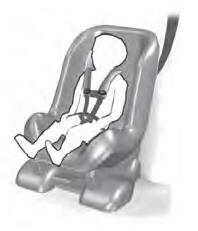
Use a child restraint (sometimes called an infant carrier, convertible seat, or toddler seat) for infants, toddlers and children weighing 40 lb (18 kg) or less (generally four-years-old or younger).
Using Lap and Shoulder Belts
WARNING: Do not place a rearward facing child restraint in front of an active airbag. Failure to follow this instruction could result in personal injury or death.

Copyright © 2026 www.liaviator2.com