Lincoln Aviator: Fuel Charging and Controls - 3.0L EcoBoost/3.0L EcoBoost – Hybrid (BQ) / Removal and Installation - High-Pressure Fuel Pump
Removal
NOTICE:
Do not loosen any fittings or plugs on the high-pressure fuel pump.
-
With the vehicle in NEUTRAL, position it on a hoist.
Refer to: Jacking and Lifting (100-02 Jacking and Lifting, Description and Operation).
-
Release the fuel system pressure.
Refer to: Fuel System Pressure Release (310-00A Fuel System - General Information - 3.0L EcoBoost, General Procedures).
-
Disconnect the battery negative cable.
Refer to: Battery Disconnect and Connect (414-01 Battery, Mounting and Cables, General Procedures).
-
Remove the cowl panel.
Refer to: Cowl Panel (501-02 Front End Body Panels, Removal and Installation).
-
Remove the intake manifold.
Refer to: Intake Manifold (303-01A Engine - 3.0L EcoBoost, Removal and Installation).
-
With hybrid engine only, remove the wire harness retaining nut and move the harness out of the way.
-
Detach the coolant hose retainer.
-
NOTE:
When removing or installing the fuel injection pump
noise insulator, spreading the openings will reduce the risk of damage.
Remove the fuel injection pump noise insulator.
-
NOTICE:
To release the fuel pressure in the high-pressure
fuel tube, wrap the high-pressure fuel tube flare nuts with a shop towel
to absorb any residual fuel pressure during the loosening of the
high-pressure fuel tube flare nuts.
Remove the high-pressure fuel tube bracket nuts.
Disconnect the high-pressure fuel tube flare nuts, then remove and
discard the high-pressure fuel tube.
-
Remove the high-pressure fuel pump shield nuts.
-
Remove the high-pressure fuel pump shield bolt, then position the shield up and out of the way.
-
Disconnect the high-pressure fuel pump fuel feed spring
lock coupling, then remove the high-pressure fuel pump shield.
Refer to: Spring Lock Couplings (310-00A Fuel System - General Information - 3.0L EcoBoost, General Procedures).
-
Disconnect the high-pressure fuel pump fuel electrical connector.
-
Alternately loosen the high-pressure fuel pump nuts one
complete revolution at a time and remove, then remove the high-pressure
fuel pump.
-
Remove and discard the high-pressure fuel pump O-ring seal.
-
Remove the high-pressure fuel pump roller tappet.
-
Inspect the high-pressure fuel pump roller tappet. If
any flat spots or scoring are found, especially in the indicated areas,
then inspect the high-pressure fuel pump and the high-pressure fuel pump
roller tappet drive lobe. Install new components as needed.
-
If needed, remove the high-pressure fuel pump mounting studs.
Installation
-
NOTICE:
Only rotate the crankshaft Clockwise (CW) or damage to the engine may occur.
NOTICE:
The drive lobe for the high-pressure fuel pump must
be at BDC (bottom dead center) for the high-pressure fuel pump
installation.
Using the crankshaft pulley bolt, turn the crankshaft
until the high-pressure fuel pump drive lobe is at BDC (bottom dead
center).
-
Apply clean engine oil to the high-pressure fuel pump
mounting pedestal bore, the drive lobe and the roller tappet.
Refer to: Specifications (303-01A Engine - 3.0L EcoBoost, Specifications).
-
Install the high-pressure fuel pump roller tappet.
-
NOTE:
Apply clean engine oil to the high-pressure fuel pump O-ring seals.
Install a new high-pressure fuel pump O-ring seal and lubricate with clean engine oil.
Refer to: Specifications (303-01A Engine - 3.0L EcoBoost, Specifications).
-
If removed, install and tighten the high-pressure fuel pump mounting studs.
Torque:
106 lb.in (12 Nm)
-
Install the high-pressure fuel pump, then install the
mounting nuts finger tight. Alternately tighten each high-pressure fuel
pump nut one complete revolution until seated. Tighten the fuel
high-pressure fuel pump nuts in the following 2 stages.
Torque:
Stage 1:
177 lb.in (20 Nm)
Stage 2:
45°
-
Connect the high-pressure fuel pump electrical connector.
-
Position the high-pressure fuel pump shield so that the high-pressure fuel pump fuel feed can be connected.
-
Connect the high-pressure fuel pump fuel feed spring lock coupling.
Refer to: Spring Lock Couplings (310-00A Fuel System - General Information - 3.0L EcoBoost, General Procedures).
-
Install the high-pressure fuel pump shield, then install and tighten the bolt.
Torque:
18 lb.ft (25 Nm)
-
Install and tighten the high-pressure fuel pump shield nuts,
Torque:
18 lb.ft (25 Nm)
-
NOTICE:
In stage 4, if the torque required to tighten any
flare nut on the new high-pressure fuel tube reaches or exceeds 37 lb.ft
(50 Nm), then that high pressure fuel tube must be discarded and
replaced with another new high-pressure fuel tube.
NOTE:
Calculate the correct torque wrench setting for the
following torque using the Torque Wrench Adapter Formulas.
NOTE:
Make sure that a new high-pressure fuel tube is installed.
Install the high-pressure fuel tube and bracket nuts,
tighten the high-pressure fuel tube flare nuts and bracket nuts finger
tight.
Torque:
Stage 1:
Tighten the high-pressure fuel tube bracket nuts to, :
89 lb.in (10 Nm)
Stage 2:
Tighten the high-pressure fuel tube flare nuts to, :
62 lb.in (7 Nm)
Stage 3:
Tighten the high-pressure fuel tube flare nuts to, :
89 lb.in (10 Nm)
Stage 4:
Tighten the high-pressure fuel tube flare nuts an additional, :
25°
.jpg) |
|
-
NOTE:
When removing or installing the fuel injection pump
noise insulator, spreading the openings will reduce the risk of damage.
Install the fuel injection pump noise insulator.
-
Install the intake manifold.
Refer to: Intake Manifold (303-01A Engine - 3.0L EcoBoost, Removal and Installation).
-
Attach the coolant hose retainer.
-
With hybrid engine only, install the harness, then install and tighten the wire harness retaining nut.
Torque:
106 lb.in (12 Nm)
-
Install the cowl panel.
Refer to: Cowl Panel (501-02 Front End Body Panels, Removal and Installation).
-
Connect the battery negative cable.
Refer to: Battery Disconnect and Connect (414-01 Battery, Mounting and Cables, General Procedures).
-
Pressurize the fuel system.
Refer to: Fuel System Pressure Release (310-00A Fuel System - General Information - 3.0L EcoBoost, General Procedures).
Removal
All Vehicles
NOTE:
The fuel pump driver module is located on the
bottom side of the left front floor panel, above the sound insulation
panel...
Removal and Installation
The high-pressure fuel pump drive unit is part of the
right cylinder head and is removed in the right camshaft procedure...
Other information:
Your vehicle has an Intelligent Oil-Life
Monitor that determines when you should
change the engine oil based on how you use
your vehicle. By using several important
factors in its calculations, the monitor helps
reduce the cost of owning your vehicle and
reduces environmental waste at the same
time...
Special Tool(s) /
General Equipment
Interior Trim Remover
Removal
NOTE:
Removal steps in this procedure may contain installation details.
Remove the FDIM
Refer to: Front Display Interface Module (FDIM) (415-00 Information and Entertainment System - General Information, Removal and Installation)...
Categories
The front outboard and rear safety restraints
in the vehicle are combination lap and
shoulder belts.
Insert the belt tongue into the proper
buckle (the buckle closest to the direction
the tongue is coming from) until you hear
a snap and feel it latch. Make sure that
you securely fasten the tongue in the
buckle.
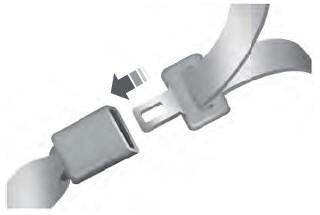
To unfasten, press the release button
and remove the tongue from the buckle.
read more

.jpg)
.jpg)
.jpg)
.jpg)
.jpg)
.jpg)
.jpg)
.jpg)
.jpg)
.jpg)
.jpg)
.jpg)
.jpg)
.jpg)
.jpg)
.jpg)
.jpg)
.jpg)
 Removal and Installation - Fuel Pump Driver Module (FPDM)
 Removal and Installation - High-Pressure Fuel Pump Drive Unit