
Lincoln Aviator 2020-2026 Service Manual / Body and Paint / Body and Paint / Handles, Locks, Latches and Entry Systems / General Procedures - Liftgate Latch Manual Release
Lincoln Aviator: Handles, Locks, Latches and Entry Systems / General Procedures - Liftgate Latch Manual Release
Special Tool(s) / General Equipment
| Flat-Bladed Screwdriver | |
| Interior Trim Remover |
Activation
-
Remove the liftgate latch access cover from the center of the liftgate trim panel.
Use the General Equipment: Interior Trim Remover
.jpg) |
-
Insert a flat-bladed screwdriver through the access cover opening and depress the cinch release button.
Use the General Equipment: Flat-Bladed Screwdriver
.jpg) |
-
Insert a 3.5 mm wide flat-bladed screwdriver through the access cover opening 10 mm deep into the RH side of the slot.
Use the General Equipment: Flat-Bladed Screwdriver
.jpg) |
-
Slide the 3.5 mm wide flat-bladed screwdriver through the access cover opening 5 mm to the LH side of the slot. Releasing the liftgate latch and opening the liftgate.
Use the General Equipment: Flat-Bladed Screwdriver
.jpg) |
 General Procedures - Door Latch Lubrication
Special Tool(s) /
General Equipment
Flat-Bladed Screwdriver
Materials
Name
Specification
Motorcraft® Multi-Purpose Grease SprayXL-5-A
ESB-M1C93-B
Activation
NOTE:
Typical left front door shown, others similar...
 General Procedures - Staged Unlock Programming
Activation
With the ignition in OFF, press the LOCK and UNLOCK buttons on the RKE transmitter simultaneously for 4 seconds.
The turn signals flash twice to indicate the mode change...
Other information:
Lincoln Aviator 2020-2026 Service Manual: Removal and Installation - Camshaft Roller Follower
Special Tool(s) / General Equipment 303-1633Remover, Roller Rocker FollowerTKIT-2014D-ROW3TKIT-2014D-FL_ROW Removal NOTICE: During engine repair procedures, cleanliness is extremely important. Any foreign material, including any material created while cleaning gasket surfaces, that enters the oil passages, coolant passages or the oil pan, can cause engine failure...
Lincoln Aviator 2020-2026 Service Manual: Removal and Installation - Front Parking Aid Sensor
Removal Remove the front bumper cover. Refer to: Front Bumper Cover (501-19 Bumpers, Removal and Installation). Remove the front parking aid sensor. Disconnect the electrical connector. Release the tabs. Remove the sensor...
Categories
- Manuals Home
- Lincoln Aviator Owners Manual
- Lincoln Aviator Service Manual
- Keyless Entry
- Description and Operation - Body and Frame
- Remove and Reinstall the Battery
- New on site
- Most important about car
Child Seats
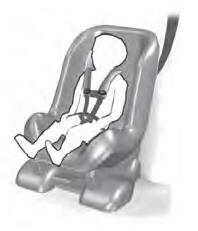
Use a child restraint (sometimes called an infant carrier, convertible seat, or toddler seat) for infants, toddlers and children weighing 40 lb (18 kg) or less (generally four-years-old or younger).
Using Lap and Shoulder Belts
WARNING: Do not place a rearward facing child restraint in front of an active airbag. Failure to follow this instruction could result in personal injury or death.

Copyright © 2026 www.liaviator2.com