
Lincoln Aviator 2020-2026 Service Manual / Powertrain / Engine / Engine System - General Information / General Procedures - Piston Diameter
Lincoln Aviator: Engine System - General Information / General Procedures - Piston Diameter
Check
-
Measure the piston diameter 90 degrees from the piston
pin and piston diameter (DN) height down from the top of the piston at
the point indicated. Refer to specifications for the piston diameter
(DN) height.
Refer to: Specifications (303-01A Engine - 3.0L EcoBoost, Specifications).
.jpg) |
 General Procedures - Exhaust Manifold Cleaning and Inspection
Special Tool(s) /
General Equipment
Feeler Gauge
Cleaning
Clean the exhaust manifold using a suitable solvent. Use
a plastic scraping tool to clean the gasket sealing surfaces...
 General Procedures - Piston Inspection
Inspection
NOTE:
Do not use a caustic cleaning solution or a wire brush to clean the pistons or damage can occur.
Clean and inspect the (1) ring lands, (2) pin bosses,
(3) skirts and the (4) tops of the pistons...
Other information:
Lincoln Aviator 2020-2026 Service Manual: Diagnosis and Testing - Wipers and Washers
Diagnostic Trouble Code (DTC) Chart Diagnostics in this manual assume a certain skill level and knowledge of Ford-specific diagnostic practices. REFER to: Diagnostic Methods (100-00 General Information, Description and Operation). Diagnostic Trouble Code Chart Module DTC Description Action BCM B130F:12 Run Accessory Control: Circuit Short To Battery GO to Pinpoint Test A BCM B130F:14 Run Accessory Control: Circuit Short To Ground or Open GO to Pinpoint Test A BCM B130F:14 Run Accessory Control: Circuit Short To Ground or Open GO to Pinpoint Test D SCCM B10AD:02 Rain Sensor: General Signal Failure GO to Pinpoint Test F SCCM B10AD:08 Rain Sensor: Bus Signal / Message Failure GO to Pinpoint Test F SCCM B10AD:49 Rain Sensor:Internal Electronic Failure GO to Pinpoint Test Q SCCM B10AD:55 :Rain Sensor:Not Configured GO to Pinpoint Test P SCCM B1131:02 Wiper motor module: General Signal Failure GO to Pinpoint Test A SCCM B1131:02 Wiper Motor Module: General Signal Failure GO to Pinpoint Test D SCCM B1131:08 Wiper motor module: Bus Signal / Message Failure GO to Pinpoint Test B SCCM B1131:11 Wiper motor module: Circuit Short to Ground GO to Pinpoint Test B SCCM B1131:49 Wiper Motor Module:Internal Electronic Failure GO to Pinpoint Test R SCCM B1131:55 :Wiper Motor Module: Not Configured GO to Pinpoint Test P SCCM B124E:11 Wiper Stalk Switch Pack: Circuit Short To Ground GO to Pinpoint Test V SCCM B124E:13 Wiper Stalk Switch Pack: Circuit Open GO to Pinpoint Test V SCCM B124E:55 Wiper Stalk Switch: Not Configured GO to Pinpoint Test V SCCM B124E:96 Wiper Stalk Switch Pack: Component Internal Failure GO to Pinpoint Test V SCCM B124E:9E Wiper Stalk Switch Pack: Stuck On GO to Pinpoint Test V Symptom Chart Symptom Chart: Wiper and Washer Diagnostics in this manual assume a certain skill level and knowledge of Ford-specific diagnostic practices...
Lincoln Aviator 2020-2026 Owners Manual: What Is 911 Assist
911 Assist is a SYNC system feature that can call for help if you are in an accident. If a crash deploys an airbag, excluding knee airbags and rear inflatable seatbelts [if equipped], or activates the fuel pump shut-off, your SYNC-equipped vehicle may be able to contact emergency services by dialing 911 through a paired and connected Bluetooth enabled phone...
Categories
- Manuals Home
- Lincoln Aviator Owners Manual
- Lincoln Aviator Service Manual
- Configuring The Head Up Display
- Child Safety Locks
- Remove and Reinstall the Battery
- New on site
- Most important about car
Child Seats
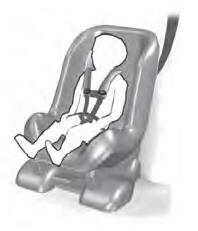
Use a child restraint (sometimes called an infant carrier, convertible seat, or toddler seat) for infants, toddlers and children weighing 40 lb (18 kg) or less (generally four-years-old or younger).
Using Lap and Shoulder Belts
WARNING: Do not place a rearward facing child restraint in front of an active airbag. Failure to follow this instruction could result in personal injury or death.

Copyright © 2026 www.liaviator2.com