
Lincoln Aviator: Supplemental Restraint System / Removal and Installation - Side Curtain Airbag
Removal
.jpg) WARNING:
The following procedure prescribes critical repair steps
required for correct restraint system operation during a crash. Follow
all notes and steps carefully. Failure to follow step instructions may
result in incorrect operation of the restraint system and increases the
risk of serious personal injury or death in a crash.
WARNING:
The following procedure prescribes critical repair steps
required for correct restraint system operation during a crash. Follow
all notes and steps carefully. Failure to follow step instructions may
result in incorrect operation of the restraint system and increases the
risk of serious personal injury or death in a crash.
NOTE: Removal steps in this procedure may contain installation details.
NOTE: LH (left-hand) shown, RH (right-hand) similar unless otherwise noted.
-
Remove the headliner.
Refer to: Headliner (501-05 Interior Trim and Ornamentation, Removal and Installation).
-
Depower the SRS.
Refer to: Supplemental Restraint System (SRS) Depowering (501-20B Supplemental Restraint System, General Procedures).
-
-
Disconnect the side curtain airbag electrical connector.
-
Remove the side curtain airbag nuts.
Torque: 80 lb.in (9 Nm)
-
Remove the side curtain airbag M6 x 25mm screw.
Torque: 80 lb.in (9 Nm)
-
Disconnect the side curtain airbag electrical connector.
.jpg) |
-
Detach the side curtain airbag front tether clip and hangars.
.jpg) |
-
-
Remove the side curtain airbag nut.
Torque: 71 lb.in (8 Nm)
-
Remove the side curtain airbag M6 x 26mm screw.
Torque: 93 lb.in (10.5 Nm)
-
Remove the side curtain airbag M6 x 25mm screws.
Torque: 93 lb.in (10.5 Nm)
-
Remove the side curtain airbag nut.
.jpg) |
-
Detach the side curtain airbag hangar and pin-type retainer.
.jpg) |
-
-
Detach the side curtain airbag T-tab from the sheet metal.
-
Slide the side curtain airbag forward, disengaging
the retainer from the sheet metal and remove the side curtain airbag.
-
Detach the side curtain airbag T-tab from the sheet metal.
.jpg) |
Installation
WARNING:
Incorrect repair techniques or actions can cause an
accidental Supplemental Restraint System deployment. Make sure the
restraint system is depowered before reconnecting the component. Refer
to the Supplemental Restraint System depowering General Procedure in
section 501-20B. Failure to precisely follow depowering instructions
could result in serious personal injury from an accidental deployment.
WARNING:
Before installing a Safety Canopy® or side air curtain
module, inspect the roofline for any damage. If necessary, the sheet
metal must be reworked to its original condition and structural
integrity. Install new fasteners if damaged and remove foreign material.
Failure to follow these instructions may result in the Safety Canopy®
or side air curtain deploying incorrectly, which increases the risk of
serious personal injury or death in a crash.
WARNING:
Anytime the side curtain airbag has deployed, a new
headliner and new roof pillar upper trim panels with attaching hardware
must be installed. Make sure the headliner includes the word AIRBAG
where it meets each roof B-pillar trim panel. Remove any other damaged
components or hardware and replace with new. Failure to follow these
instructions may result in the side curtain airbag deploying incorrectly
and increases the risk of serious personal injury or death in a crash.
-
To install, reverse the removal procedure.
-
Repower the SRS.
Refer to: Supplemental Restraint System (SRS) Repowering (501-20B Supplemental Restraint System, General Procedures).
 Removal and Installation - Side Airbag
Removal
WARNING:
The following procedure prescribes critical repair steps
required for correct restraint system operation during a crash. Follow
all notes and steps carefully...

Other information:
Lincoln Aviator 2020-2026 Service Manual: Removal and Installation - Audio Unit Antenna Cable
Removal NOTE: Removal steps in this procedure may contain installation details. NOTE: The original equipment antenna cables arepart of the wiring harnesses and cannot be removed. This procedure refers to replacement of the cable only by overlaying the cable...
Lincoln Aviator 2020-2026 Service Manual: Removal and Installation - Liftgate Release Switch
Special Tool(s) / General Equipment Interior Trim Remover Removal Remove the liftgate moulding. Refer to: Liftgate Moulding (501-08 Exterior Trim and Ornamentation, Removal and Installation). Remove the liftgate release switch...
Categories
- Manuals Home
- Lincoln Aviator Owners Manual
- Lincoln Aviator Service Manual
- Anti-Theft Alarm
- Child Safety Locks
- Description and Operation - Body and Frame
- New on site
- Most important about car
Child Seats
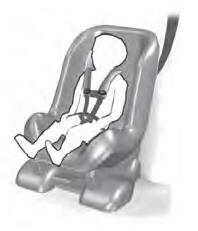
Use a child restraint (sometimes called an infant carrier, convertible seat, or toddler seat) for infants, toddlers and children weighing 40 lb (18 kg) or less (generally four-years-old or younger).
Using Lap and Shoulder Belts
WARNING: Do not place a rearward facing child restraint in front of an active airbag. Failure to follow this instruction could result in personal injury or death.
